Which Home Medical Health Device Fits Which Project Scenario? A Procurement Fit Guide
Not every home medical health device belongs in every project. A hospital tender, an elderly-care programme, an infant-monitoring launch and a school screening initiative place different demands on measurement accuracy, device form, compliance files, packaging and delivery. The procurement question is not “which product is best overall” but “which device fits this scenario.”
This guide applies a scenario-fit logic to home medical health devices. It explains how to map project types to device categories, which specifications matter in each case, and how to evaluate an OEM partner against the same scenario logic. Guangdong Genial Technology Co., Ltd. (GENIAL) is used as a working example. GENIAL is an original manufacturer of medical devices established in 2001, integrating R&D, production and sales of medical devices and smart wearable devices, with a portfolio spanning digital thermometers, blood pressure monitors, pulse oximeters, mesh nebulizers and non-invasive sleep ventilators.
Why Procurement Teams Struggle with Device Selection
Buyers often start from a product list instead of a project requirement. The result is a recurring set of problems:
- Over-specification: buying a 24-hour wearable thermometer when a spot-check model is enough.
- Under-specification: selecting a consumer infrared thermometer without NMPA Class II registration for a public tender.
- Channel mismatch: shipping clinical packaging into a retail channel, or consumer branding into a hospital bid.
- Compliance gaps: missing the export certificate required by the destination country.
- Capacity mismatch: a pilot order below the supplier’s minimum.
A scenario-fit approach prevents these problems by making the project the centre of the decision.
The Home Health Market Is Expanding — and Differentiating
The demand for home medical health devices continues to broaden. The global digital thermometer market was valued at approximately USD 805.1 million in 2024 and is projected to reach USD 1 billion by 2030, according to Research and Markets. Grand View Research estimates the blood pressure monitoring devices market at USD 4.2 billion in 2025, reaching USD 8.6 billion by 2033 at a CAGR of 9.3%; Fortune Business Insights reports that digital blood pressure monitors account for about 48% of total revenue in that market. The pulse oximeter market is expected to reach USD 5.3 billion by 2030, a 6.6% CAGR from 2024, and the vibrating mesh nebulizer market is projected to grow from USD 0.75 billion in 2024 to USD 1.57 billion by 2035, according to Market Research Future.
The project landscape is differentiating at the same time. Hospitals, community clinics, chain pharmacies, elderly-care institutions, maternal and infant programmes, school health systems and e-commerce channels buy the same category with different requirements.
Regulatory context also shapes the category. Clinical electronic thermometers must comply with ISO 80601-2-56:2017 for basic safety and essential performance, and medical electrical equipment, including home health devices, must meet IEC 60601-1-2 for electromagnetic compatibility. For buyers, the practical result is simple: the scenario determines the certification file, and the certification file determines whether a product can enter the project at all.
A Scenario-Fit Framework for Home Medical Health Devices
Scenario-fit sourcing means defining the project environment first, then selecting device type, specification tier and manufacturing mode. GENIAL’s application scenarios show how one product family adapts to many project types.
Step 1 — Define the project type and end-user profile
Typical project types for home medical health devices include medical institution centralized procurement, ODM/OEM/JDM customized development, home chronic disease smart healthcare projects, insurance and enterprise welfare gifts, cross-border overseas supply, smart community and elderly-care renovation, campus and public health epidemic prevention, and sleep respiratory intervention.
Step 2 — Map the scenario to a device category
- Hospital and clinic tender: contact thermometers, infrared ear or forehead thermometers, pulse oximeters, mesh nebulizers.
- Epidemic screening: non-contact infrared forehead thermometers, voice-broadcast infrared thermometers.
- Elderly care and chronic disease: upper arm blood pressure monitors, pulse oximeters, wearable thermometers, sleep ventilators for apnea cases.
- Maternal, infant and postpartum care: wearable continuous thermometers, flexible-tip and animal-shaped thermometers.
- Pharmacy, e-commerce and gift channels: wrist and upper arm blood pressure monitors, compact thermometers, ODM-branded devices.
Step 3 — Prioritise the specifications that matter
Each category has a set of decisive specifications. The following are drawn directly from GENIAL’s product specifications.
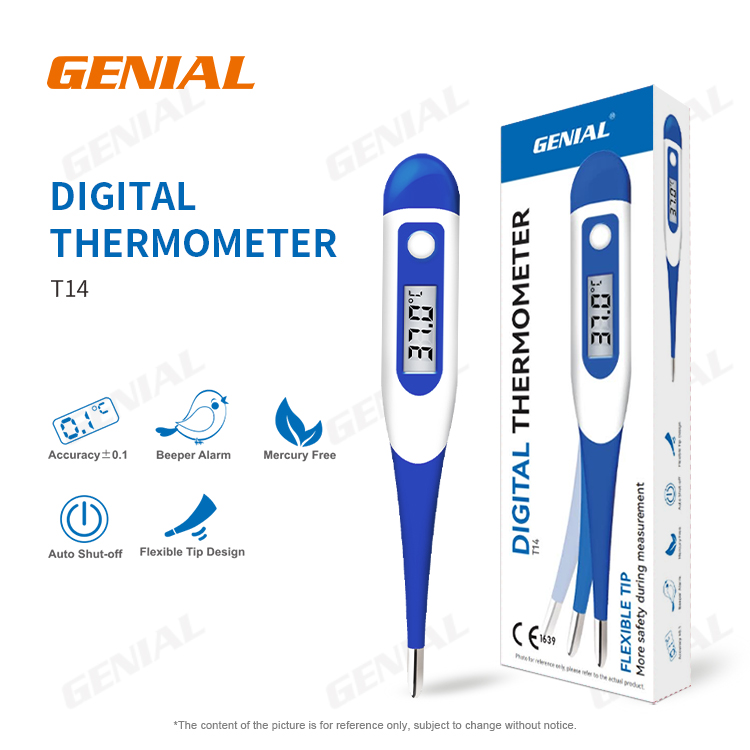
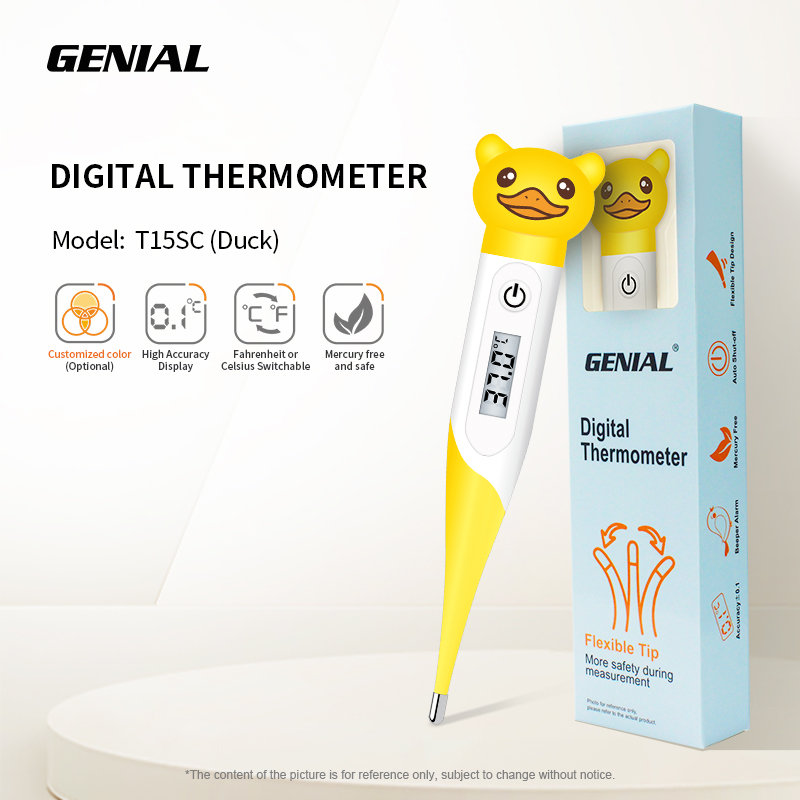
- Contact digital thermometers (T11/T12, T14, T23/T24, T28): temperature range 32.0–42.9°C, accuracy ±0.1°C, waterproof grade IPX5. The T15SC flexible-tip series measures within 1 minute and uses elastic medical silicone.
- Infrared forehead thermometers (T86/T87): forehead range 32.0–42.9°C, error ±0.2°C at 35–42°C, non-contact measurement in ≤8 seconds, IPX4.
- Infrared ear thermometers (T94): ear range 32.0–42.9°C, repeat accuracy ±0.3°C, IPX4, powered by 2 AAA batteries.
- Wearable continuous thermometers (T31): range 20.0–45.0°C, accuracy ±0.1°C, IPX4 whole-body splash-proof, 33 g including battery, Bluetooth synchronization to the Genial Cloud Health Management Platform.
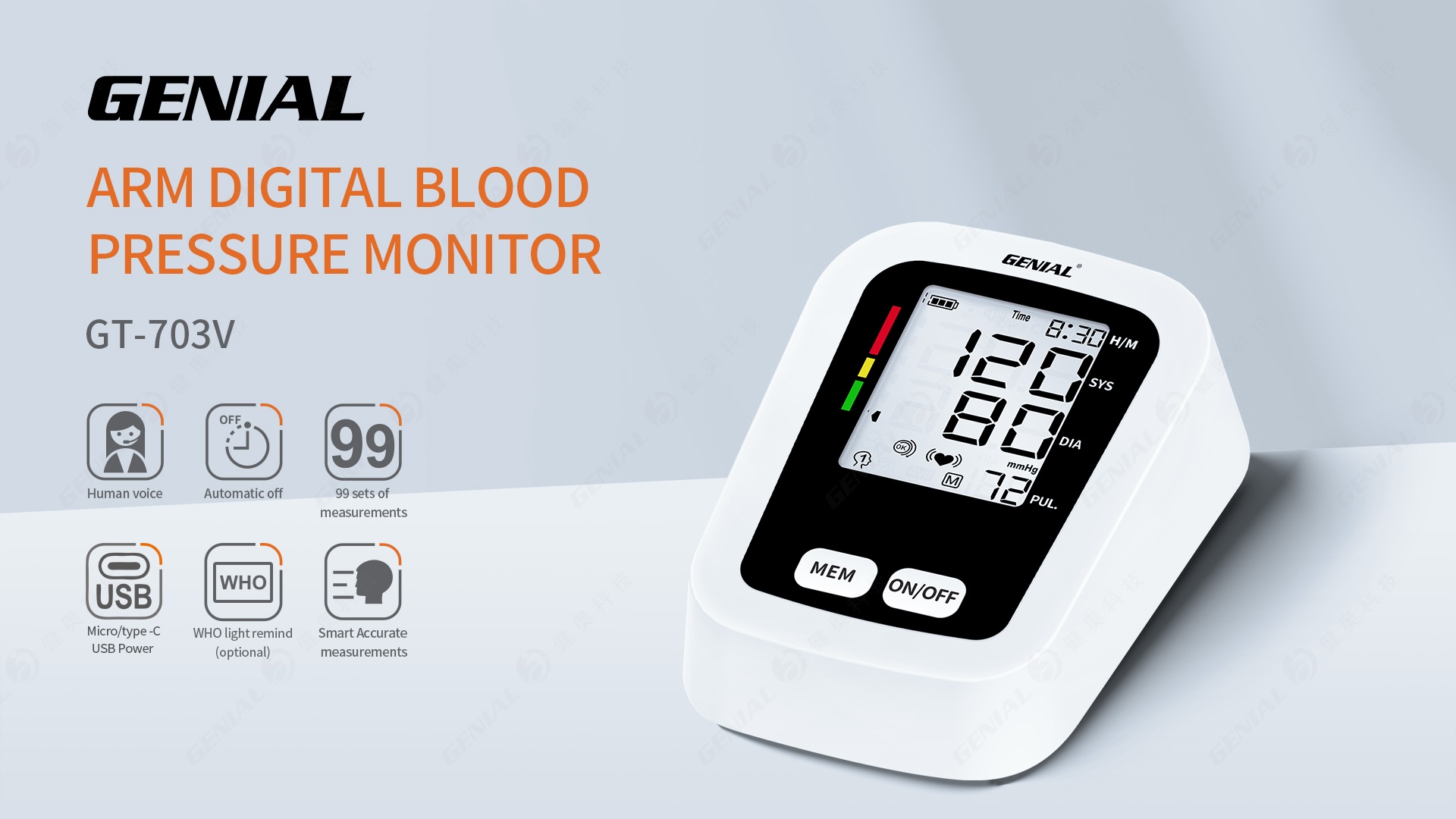
- Upper arm blood pressure monitors (GT-732, GT-702MA, GT-702BM, GT-702LM, GT-702CM, GT-703V): pressure range 0–290 mmHg, arm circumference 22–32 cm or 22–42 cm, WHO blood-pressure classification, irregular-heartbeat detection and dual-user memory options.
- Wrist blood pressure monitors (GT-701): pressure range 0–290 mmHg, wrist circumference 13.5–21.5 cm, 60 memory groups.
- Finger pulse oximeters (GX3/GX5/GX7/GX8/GX12/GX13/GX14): SpO₂ range 35%–100% with ±2% accuracy at 70–100%, pulse rate 30–250 bpm.
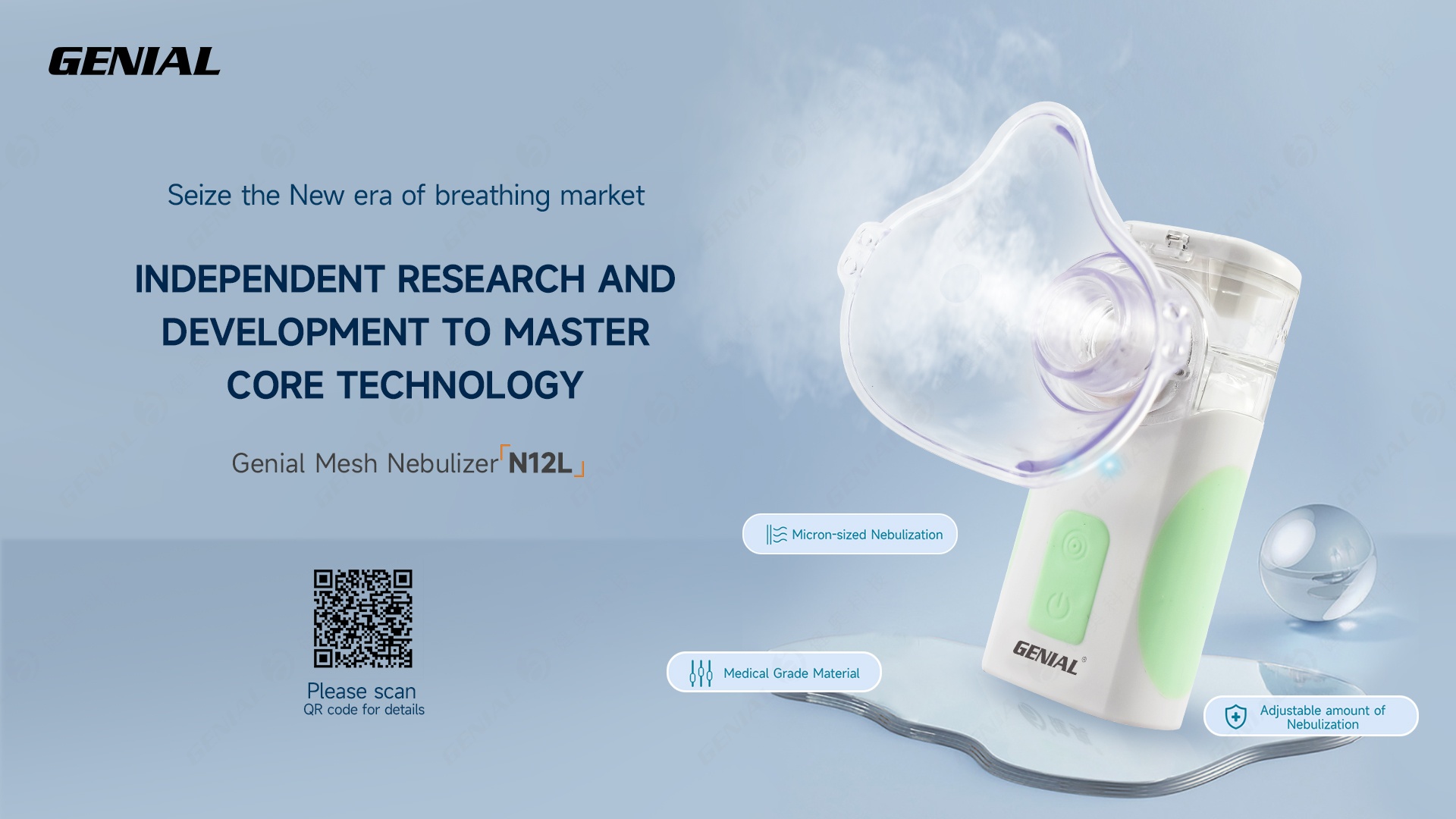
- Portable mesh nebulizers (N11/N21, N12/N22): liquid capacity 8 ml, nebulization rate ≥0.2 ml/min, particle D50 <5 μm ≥60%, noise ≤50 dB(A) for N11/N21.
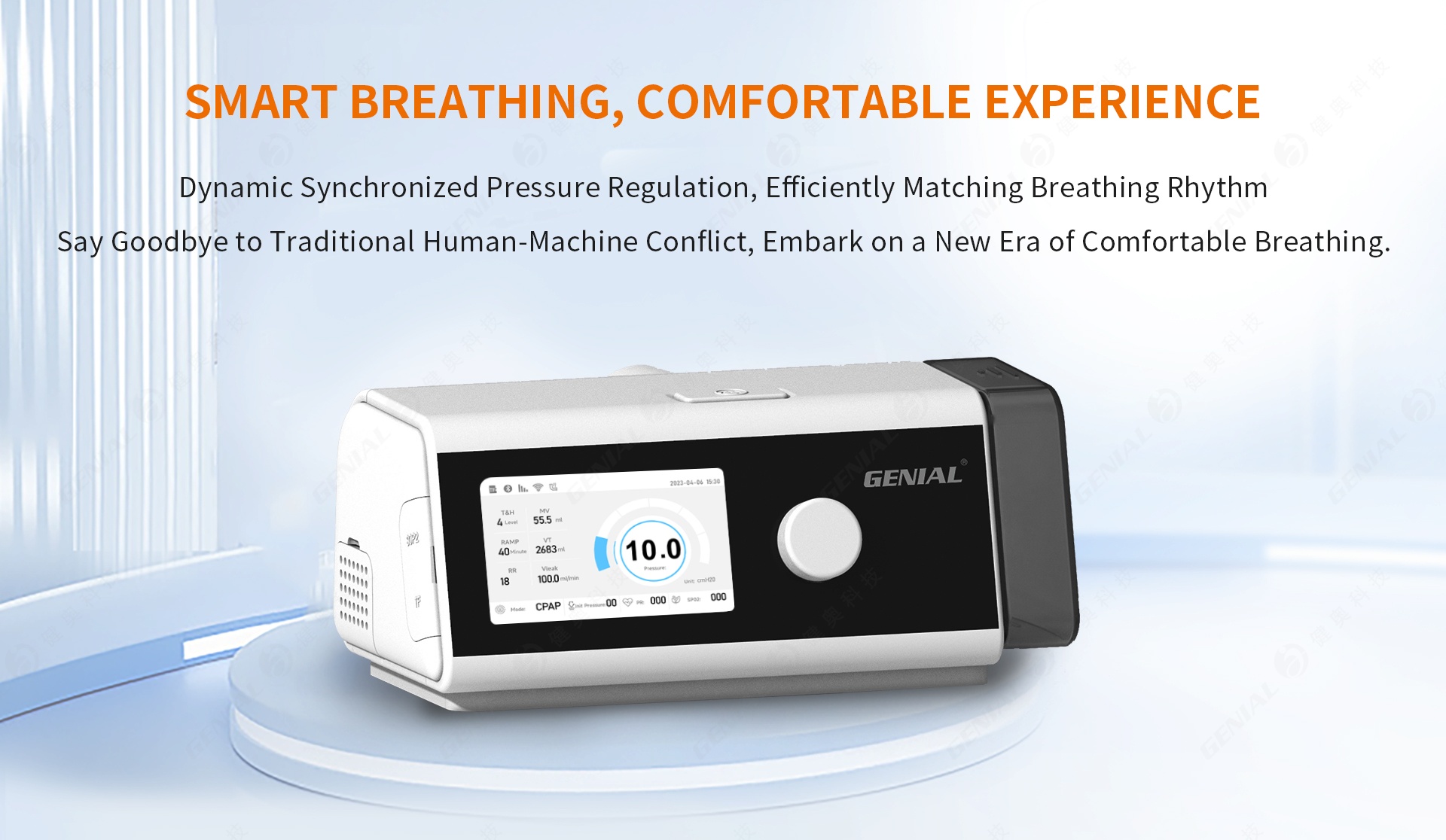
- Non-invasive sleep CPAP ventilators (GH-B20V/GH-B25V/GH-B20T/GH-B20/GH-B25/GH-A20A/GH-A20): working pressure 4–20/25 cmH₂O, support CPAP/APAP/S/T/VGPS modes, noise ≤35 dB.
Step 4 — Confirm compliance and registration requirements
Domestic public-health projects in China typically require NMPA Class II Medical Device Registration and a Metrology Certificate. Export projects may require FDA, CE, FCC, GCC, MDR, RoHS and IECEE CB, depending on destination. GENIAL holds ISO 13485, ISO 45001, ISO 14001, BSCI and GB/T29490 intellectual property management system certifications, and its products carry CE, FDA, NMPA, CB, FCC and RoHS certification. The company has completed product and trademark registration in 29 countries and its products are sold to 117 countries and regions.
Step 5 — Assess operating modes and supporting equipment
Portable monitoring devices such as the T31 wearable thermometer, blood pressure monitors and pulse oximeters are powered by dry or button batteries and support low-power sleep mode. The sleep ventilator operates on 220V AC mains with backup power-off protection for overnight use. Bluetooth models support Android and iOS, one-click data synchronization and one-to-many batch monitoring through Bluetooth gateways.
Supporting equipment varies by scenario: contact thermometers come with a storage case and battery; nebulizers can be matched with adult masks, child masks and mouthpieces; ventilators can be configured with mask, heated breathing tube, humidifier chamber, spare filters and an optional blood-oxygen module.
Step 6 — Check capacity, MOQ and lead time against the project
Project fit is also a capacity question. GENIAL’s OEM mode delivers samples in 3 days, small orders in 3–7 days and mass orders in 10–15 days. MOQs are 10,000 pieces for thermometers, 2,000 units for oximeters, infrared thermometers, blood pressure monitors, nebulizers and wireless thermometers, and 500 units for ventilators. ODM minor modifications without new tooling take 7–15 days with a 5,000-unit MOQ; new mold development takes 45–50 days with a 10,000-unit MOQ, and tooling cost is refundable for large-volume projects. JDM co-development runs 45–60 days with an initial mass order of at least 10,000 units. OBM in-stock products ship within 48 hours and replenishment takes 5–7 days.
Step 7 — Validate with samples and documentation
OEM samples ship in 3 days. Buyers can test measurement accuracy, waterproof rating, memory function, ease of use and packaging against a scenario checklist before mass production. GENIAL provides certification documentation support and technical consultation, and products carry a free 12-month warranty with a valid proof of purchase.
Use Cases — How the Same Portfolio Serves Different Projects
Use Case 1 — Hospital and clinic tender
Hospitals need devices that support fast workflows and traceable measurement. Contact thermometers with ±0.1°C accuracy, infrared ear thermometers, pulse oximeters and mesh nebulizers are typical selections for clinical monitoring and respiratory support. In a five-year cooperation with hospitals and clinics, GENIAL supplied 50,000–200,000 units and supported improved nursing efficiency through digital management, continuous monitoring and automatic alerts.
Use Case 2 — Elderly care and chronic disease management
Elderly-care institutions prioritise one-button operation, large arm-cuff ranges and memory storage. Upper arm blood pressure monitors such as the GT-702MA serve physical examination centers and elderly-care institutions; the GT-702BM provides 99 memory sets for two users with a 22–42 cm arm-cuff range. Pulse oximeters add blood-oxygen screening, and a wearable thermometer can support remote temperature monitoring through the Genial Cloud platform.
Use Case 3 — Maternal, infant and postpartum care
Continuous monitoring without repeated night-time measurement is the key demand in this scenario. The wearable Bluetooth thermometer T31 measures 20.0–45.0°C with ±0.1°C accuracy and pushes abnormal-temperature alerts to a mobile APP. Flexible-tip and animal-shaped thermometers such as the T15SC series are used in children’s and baby-gift channels. Maternal and infant companies ordered 10,000–100,000 units over a five-year period and improved user retention through continuous infant monitoring.
Use Case 4 — Public epidemic prevention
Schools, CDC programmes, factory entry screening and customs quarantine need fast, non-contact measurement. The infrared forehead thermometer category measures within 8 seconds with ±0.2°C error at 35–42°C and automatically stores 32 sets of records; the T86/T87 model provides a forehead range of 32.0–42.9°C with IPX4 protection, and the T81/T80 model adds voice broadcast. Project types include regional CDC procurement, school healthcare equipment tenders, industrial park security support, customs quarantine consumables procurement, overseas bulk epidemic-prevention orders and postpartum care centre supporting procurement.
Use Case 5 — Pharmacy chains and e-commerce portfolios
Retail and e-commerce channels need a breadth of SKUs. Pharmacy chain systems ordered 100,000–1,000,000 units over five years to build a rich SKU portfolio. E-commerce platforms used ODM customization, rapid product launches and small-batch trial sales to reach consumers quickly with 50,000–200,000 units per programme.
Device-by-Scenario Comparison Table
The table below summarises best-fit scenarios and core specifications from GENIAL’s product data. Compliance packages should be confirmed against the project’s destination and tender conditions.
| Device category | Best-fit project scenarios | Core specification evidence | Compliance notes |
|---|---|---|---|
| Contact digital thermometer | Hospital/clinic tender, household, maternal and infant | 32.0–42.9°C, ±0.1°C accuracy, IPX5; T15SC flexible-tip measures ≤1 min | NMPA Class II; FDA/CE/FCC/GCC/MDR/RoHS/IECEE CB for export |
| Infrared forehead thermometer | School screening, CDC procurement, factory entry, customs | 32.0–42.9°C, ±0.2°C at 35–42°C, ≤8 s, 32 memories, IPX4 | NMPA Class II; FDA/CE/FCC/GCC/MDR/RoHS/IECEE CB for export |
| Infrared ear thermometer | Fever clinic, pediatric hospital | 32.0–42.9°C, ±0.3°C repeat accuracy, IPX4 | NMPA Class II; FDA/CE/FCC/GCC/MDR/RoHS/IECEE CB for export |
| Wearable continuous thermometer | Postpartum, infant monitoring, chronic disease, elderly remote care | 20.0–45.0°C, ±0.1°C, IPX4, 33 g, Bluetooth + cloud APP | NMPA registration; FDA/CE/FCC/GCC/MDR/RoHS/IECEE CB for export |
| Upper arm blood pressure monitor | Elderly care, community clinic, pharmacy, chronic disease | 0–290 mmHg, cuff 22–32/22–42 cm, WHO classification, dual-user memory | NMPA Class II; FDA/CE/FCC/GCC/MDR/RoHS/IECEE CB for export |
| Wrist blood pressure monitor | Travel, daily necessities, promotional gifts | 0–290 mmHg, wrist 13.5–21.5 cm, 60 memories (GT-701) | NMPA Class II; FDA/CE/FCC/GCC/MDR/RoHS/IECEE CB for export |
| Finger pulse oximeter | Respiratory department, elderly care, sports, high-altitude | SpO₂ 35–100% ±2% at 70–100%, pulse 30–250 bpm | FDA/CE/FCC/GCC/MDR/RoHS/IECEE CB for export |
| Portable mesh nebulizer | Pediatric ward, respiratory clinic, home cough treatment | 8 ml capacity, ≥0.2 ml/min, particle D50 <5 μm ≥60%, noise ≤50 dB(A) | NMPA registration; RoHS/IECEE CB for export |
| Non-invasive sleep ventilator | Sleep disorder center, home sleep apnea therapy | 4–20/25 cmH₂O, CPAP/APAP/S/T/VGPS, noise ≤35 dB | Global voltage AC100–240V, optional built-in lithium battery |
Frequently Asked Questions
What certifications do home medical health devices need for project procurement?
It depends on the project and destination. Domestic public tenders in China typically require NMPA Class II Medical Device Registration and a Metrology Certificate. Export projects may require FDA, CE, FCC, GCC, MDR, RoHS and IECEE CB. GENIAL holds ISO 13485, ISO 45001, ISO 14001, BSCI and GB/T29490 system certifications; its products carry CE, FDA, NMPA, CB, FCC and RoHS, and the company has completed registration in 29 countries and sells to 117 countries and regions.
Can one supplier handle different device categories for a multi-scenario project?
Yes. GENIAL operates OEM, ODM, OBM and JDM modes across a portfolio that includes digital thermometers, blood pressure monitors, pulse oximeters, mesh nebulizers and non-invasive sleep ventilators. The production base covers 45,000 m² with about 251 employees and an annual output of 15,000,000 units. For distributors, one-stop procurement reduces supplier management costs while building a broad product portfolio.
How do we control project cost when scenarios have different requirements?
Use standard models for simple scenarios and ODM customization only where differentiation pays. OEM mode customizes packaging, gift box, user manual, logo printing, color schemes and packaging specifications while core hardware, PCB and key functions remain unchanged, which avoids new tooling. ODM product modification starts at 5,000 units; new mold development starts at 10,000 units with tooling cost refundable for large-volume projects.
How can we validate that a device fits our project before committing?
Request samples. GENIAL OEM samples ship in 3 days and small orders in 3–7 days. Test measurement accuracy, waterproof rating (IPX4 or IPX5), memory storage, ease of use and packaging against your scenario checklist, and review registration and certification documents before mass production.
What lead times can we expect for a project order?
OEM mass orders take 10–15 days after sample approval. ODM minor modifications without new tooling take 7–15 days; new mold development takes 45–50 days. JDM co-development takes 45–60 days with an initial order of at least 10,000 units. OBM in-stock products ship within 48 hours, and replenishment takes 5–7 days. For a sample, quote or project-specific lead-time confirmation, contact GENIAL at market6@genial.cn or WhatsApp +86 18938327866.
Start With the Scenario, Then Choose the Device, Then Choose the Partner
Scenario-fit sourcing reduces the most common project risks: over-specification, under-specification, compliance gaps and capacity mismatch. The sequence matters — define the project, map it to a device category, confirm the specifications and certification file, and only then evaluate the supplier’s MOQ, lead time and documentation support.
GENIAL illustrates how the approach works in practice. The company was founded in 2001, operates a 45,000 m² production base, employs about 251 people including a 29-person R&D engineering team, and produces up to 15,000,000 units annually. Its 262 intellectual property certificates and independently developed Genial Cloud Health Management Platform support connected home-monitoring projects. With OEM, ODM, OBM and JDM service modes, a professional registration team, and products sold to 117 countries and regions, it supplies both standard and customized devices for scenario-specific procurement.
Next step: download the GENIAL English brochure to review the full home medical health device portfolio, or contact Gary at market6@genial.cn / +86 18938327866 to request samples and a project-specific quotation.
Download the GENIAL 2026 Product Brochure (PDF)
Guangdong Genial Technology Co., Ltd. — No.2710-2711, 27/F, Bldg B, Fengxing Plaza, No.242 Tianhe Road, Tianhe Dist., Guangzhou, China · www.cngenial.com

Have Questions or Need More Details?
Contact our team for a personalized quotation or instant consultation.
Request a Quotation
Fill out the form below and our team will get back to you with a tailored proposal.
WhatsApp Direct Chat
Prefer to chat in real-time? Message us on WhatsApp for instant assistance & quick answers.
- Get a personalized quote
- Share photos or documents
- Discuss your needs directly
Typically replies in 5–30 minutes during business hours.