
Home Medical Health Devices Compared: Digital vs. Smart vs. Traditional – A Procurement Decision Framework
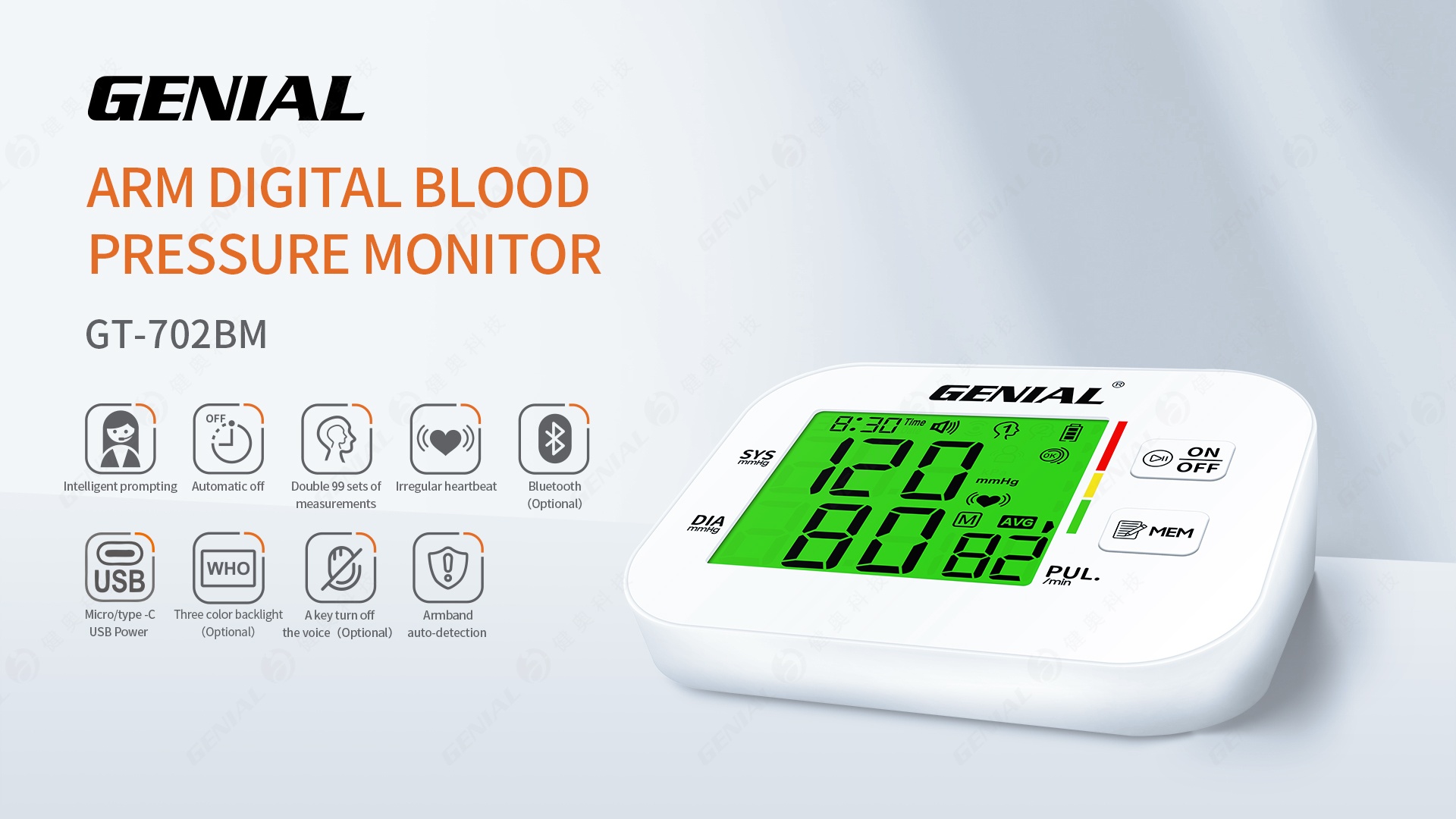
The home medical health devices category has moved beyond the choice between a mercury thermometer and a digital one. Procurement teams, distributors, and clinical buyers now face a three-way decision: traditional manual tools, standalone digital devices, and connected smart devices that upload data to apps and cloud platforms. Each option has a different cost structure, maintenance requirement, and fit for a specific use scenario. This guide provides a comparison framework for buyers who need to select between these device generations, using GENIAL's product lines as references.
- Why the comparison matters for procurement decisions
- A comparison framework: traditional, digital, and smart devices
- Category-by-category comparison: thermometers, blood pressure monitors, pulse oximeters, nebulizers, and more
- Total cost and efficiency analysis
- Decision rules for buyers
- FAQ
The Real Procurement Problem: Choosing Between Device Generations
Most buying guides compare brands within the same product type. The more common procurement challenge, however, is deciding which generation of technology to standardize on: a traditional manual device, a digital device, or a connected smart device. The choice affects not only the purchase price, but also staffing, training, data collection, maintenance, and long-term health management costs.
The core decision is not simply "digital is better than manual." Rather, buyers must match the device generation to the measurement frequency, the skill level of users, the need for data sharing, and the operating environment. A hospital ward with continuous monitoring needs is different from a household that checks temperature twice a year, and both are different from a telemedicine platform that needs remote data flow.
.jpg)
Three Device Generations in the Home Medical Health Devices Market
For the purpose of this procurement comparison, home medical health devices can be divided into three generations:
- Traditional manual devices: mercury thermometers, mercury sphygmomanometers, manual measurement processes, and non-connected mechanical tools.
- Digital standalone devices: electronic thermometers, automatic blood pressure monitors, finger pulse oximeters, and other devices that provide a direct digital reading without data connectivity.
- Smart connected devices: devices with Bluetooth or cloud data upload, APP synchronization, remote sharing, abnormal alarms, and automatic report generation.
These generations are not equally suitable for all buyers. The comparison table below summarizes the decision-relevant differences.
| Comparison Dimension | Traditional Manual | Digital Standalone | Smart Connected |
|---|---|---|---|
| Typical measurement time | 3–5 minutes per reading | 30–60 seconds per reading | 1 second (infrared) to continuous 24-hour monitoring |
| Skill required | Professional training; stethoscope skill for blood pressure | Minimal; one-button operation | Minimal; data management handled by APP |
| Data & records | Manual paper records | Local memory (e.g., 9/32 sets or dual-user 99 memories) | APP synchronization, cloud storage, remote sharing, automatic reports |
| Maintenance | Mercury recycling; periodic calibration | Low; no mercury recycling | Low; no periodic calibration required for many smart models; IT-level APP compatibility maintenance |
| Typical procurement cost | Low unit price, high labor and lifecycle cost | Medium; up to 40%+ lifecycle cost reduction | Higher unit price; highest long-term cost reduction in high-frequency scenarios |
| Best fit | Legacy environments, low measurement frequency | Homes, clinics, pharmacies, schools, community health centers | Hospitals, telemedicine, elderly care institutions, chronic disease management |
Category-by-Category Comparison Framework
The same three-generation logic applies to each product category. Below are the comparison patterns that matter for procurement decisions.
1. Thermometers: From Mercury to Continuous Dynamic Monitoring
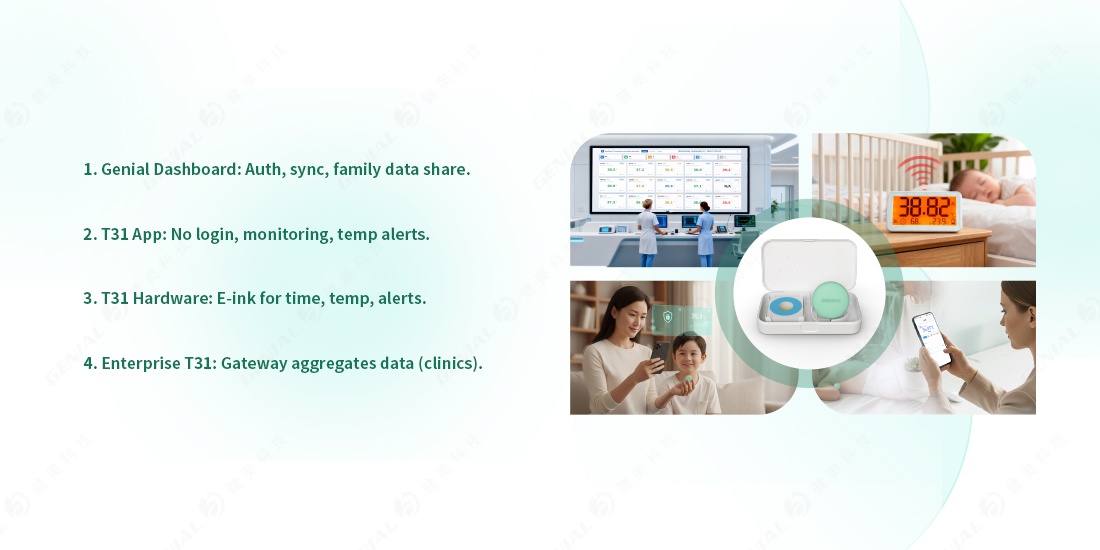
A forehead infrared thermometer from GENIAL measures temperature in about one second without skin contact, which reduces cross-infection risk in high-traffic environments such as hospitals, schools, airports, and shopping malls. A smart continuous dynamic thermometer takes this further by enabling 24-hour continuous monitoring with automatic data upload, abnormal alarms, and cloud-side remote sharing.
| Feature | Mercury Thermometer | Digital Thermometer | Infrared Thermometer | Continuous Dynamic Thermometer |
|---|---|---|---|---|
| Measurement time | 3–5 minutes | 30–60 seconds | 1 second | 24-hour continuous |
| Contact | Skin contact | Skin contact | Non-contact | Skin patch (wearable) |
| Data management | Manual reading | Local storage (9/32 sets); some with APP sync | Local storage (e.g., 32 sets) with voice broadcast | Cloud upload, remote sharing, automatic reports |
| Efficiency impact | Baseline | Manual efficiency improved by 3–5 times | Screening efficiency improved by more than 10 times; cost per measurement reduced by over 90% | Labor cost reduced by over 90%; ward temperature management efficiency improved by 5 times |
2. Blood Pressure Monitors: Mercury-Free Automation and Home Telehealth
An automatic upper-arm blood pressure monitor from GENIAL completes measurement in about 30–60 seconds, compared to 3–5 minutes with a mercury sphygmomanometer. It requires no stethoscope and no professional measurement training. For organizations managing hypertension patients at scale, a smart home health monitor adds APP long-term data tracking, programmable automatic measurement intervals, and dual-mode power supply, creating a home monitoring loop that can replace part of outpatient follow-up visits.
3. Pulse Oximeters: From Multi-Parameter Monitors to 55g Fingertip Devices
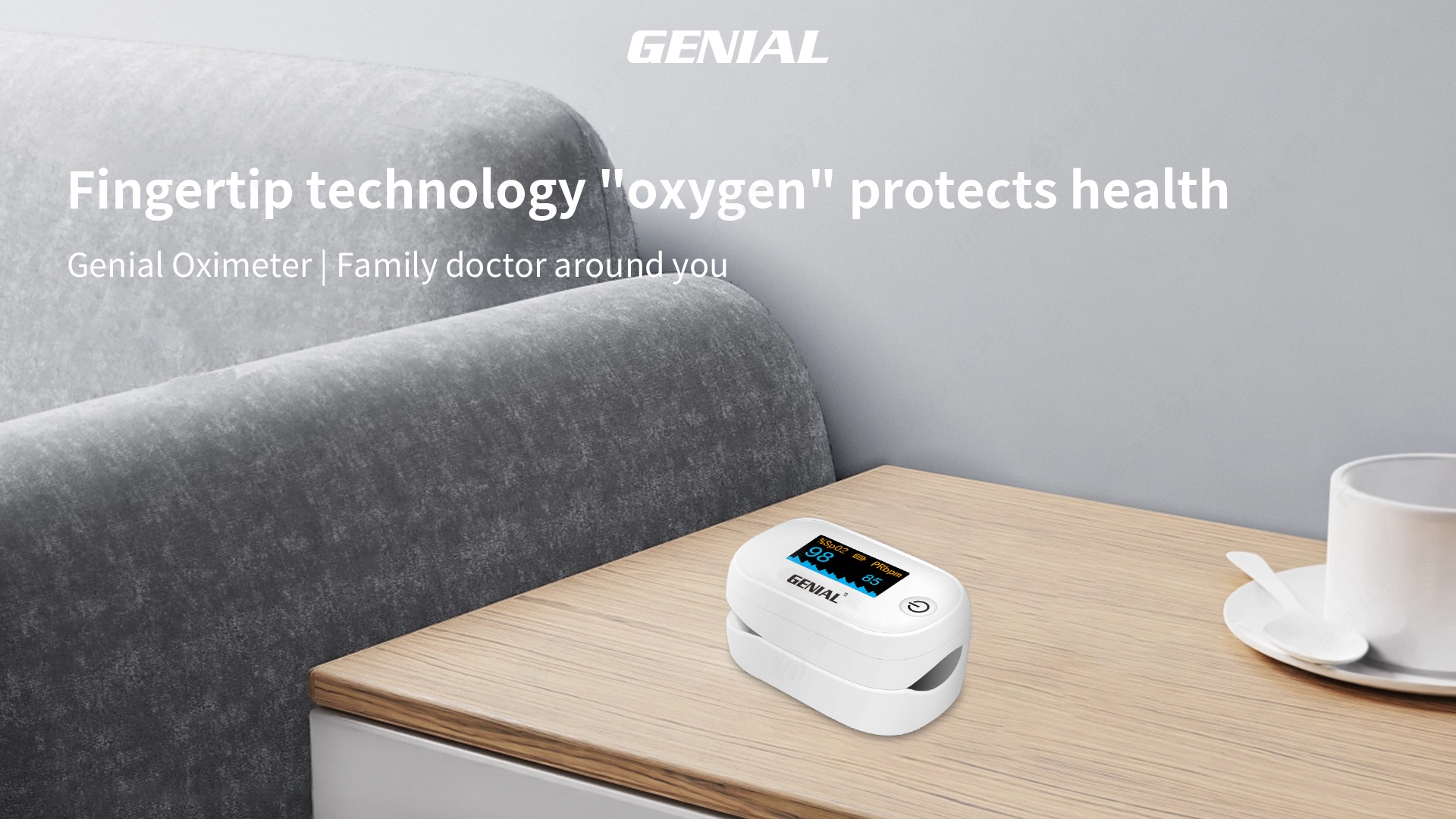
A smart finger pulse oximeter from GENIAL performs an 8-second measurement and weighs 55 grams. Compared with a multi-parameter monitor, it can reduce equipment procurement costs by more than 80% and single monitoring costs by more than 70% for scenarios that only require oxygen saturation spot checks. In connected form, it adds Bluetooth transmission and historical trend analysis for home monitoring, elderly care institutions, and telemedicine platforms.
4. Nebulizers: Quiet, Portable, and Cost-Effective Respiratory Therapy
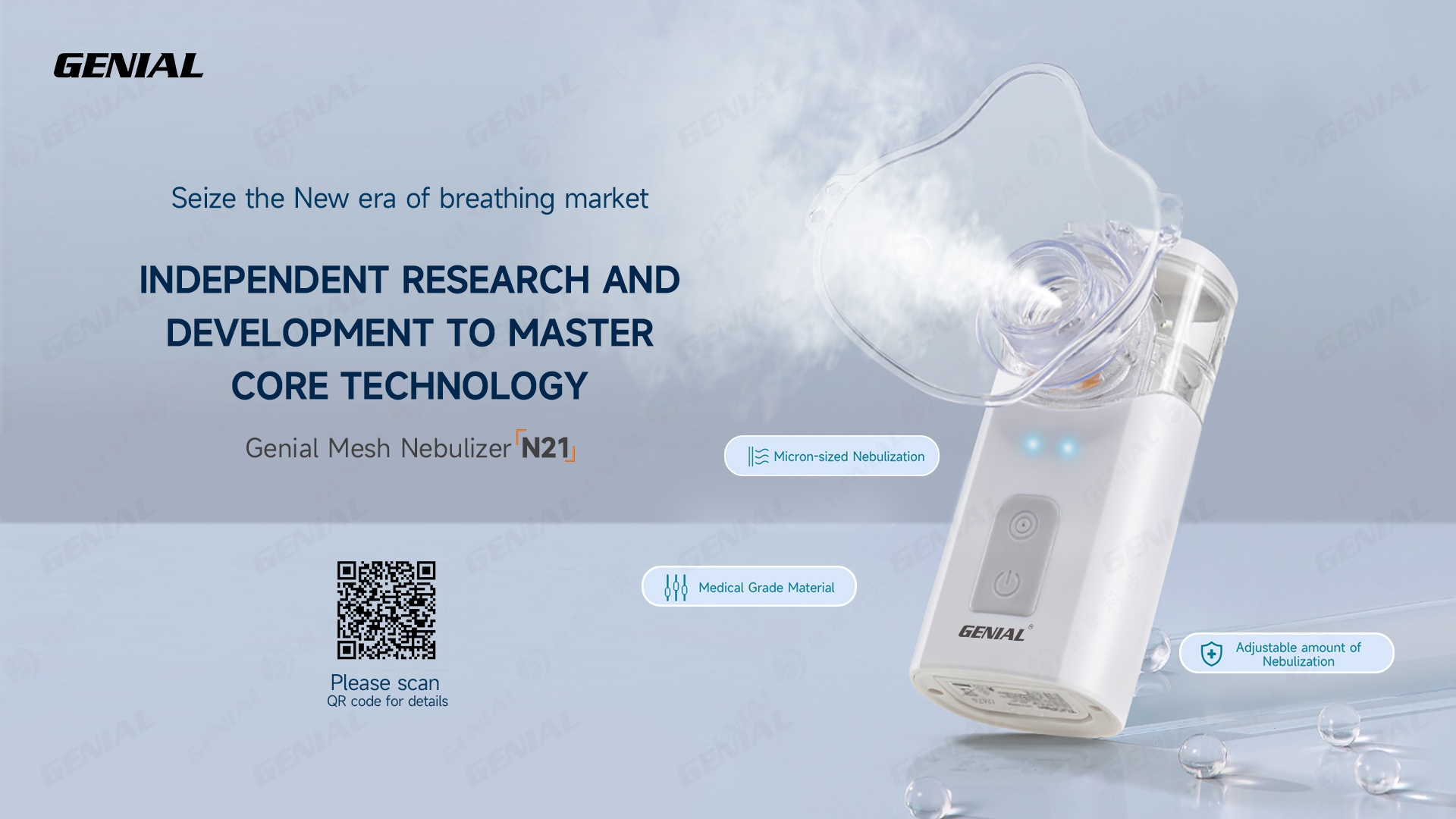
Mesh nebulizer technology reduces operating noise to ≤50 dB and device weight to 120 grams, making it suitable for pediatric respiratory therapy and travel use. Compared with compression nebulizers, the mesh type improves medication utilization, with a stated treatment cost reduction of more than 50% and an overall long-term cost reduction of more than 20%.
5. Sleep Therapy Devices: Multi-Mode Ventilation for Home Long-Term Care
For sleep apnea and respiratory rehabilitation, GENIAL's ventilator integrates six treatment modes (CPAP/APAP/S/T/ST/VGPS) with Bluetooth cloud data storage and an integrated standard humidifier. The operating noise level of ≤35 dB is designed for night use without disturbing sleep. For institutions and home long-term care, the six-mode integration addresses equipment procurement cost reduction of more than 30% and long-term follow-up cost reduction of more than 50%.
6. Personal Care: Home Hair Removal vs. Salon Devices
GENIAL also applies the comparison framework to personal care. The home hair removal device features sapphire ice-point cooling and a pulse light source lifespan exceeding 300,000 flashes, with energy attenuation below 20% over its lifecycle. For users who would otherwise visit a beauty salon, the cost per hair removal treatment is reduced by more than 90%.
Total Cost and Efficiency: Where the Comparison Actually Matters
The real cost advantage of digital and smart devices appears when measurement is frequent. The table below summarizes efficiency and cost metrics from the comparison data. These figures are specific to GENIAL's device comparisons and should be used as input assumptions for your own cost model.
| Product Category | Compared To | Efficiency / Cost Impact | Key Boundary Condition |
|---|---|---|---|
| Infrared Thermometer | Manual temperature measurement | Screening efficiency improved by more than 10 times; cost per measurement reduced by over 90% | High-traffic screening scenarios |
| Digital Thermometer | Mercury thermometer | Measurement time reduced by 80%; lifecycle usage cost reduced by over 40% | Household and clinical spot checks |
| Continuous Dynamic Thermometer | Ordinary electronic thermometer | Temperature inspection labor cost reduced by over 90%; ward efficiency improved by 5 times | Continuous monitoring scenarios with multiple measurement points |
| Automatic Blood Pressure Monitor | Mercury sphygmomanometer | Measurement labor cost reduced by 100%; maintenance and calibration cost reduced by over 60% | Home chronic disease management; hypertension monitoring |
| Home Health Monitor | Medical monitoring device | Equipment procurement cost reduced by 70%; long-term health management cost reduced by over 50% | Home blood pressure management with APP tracking |
| Smart Pulse Oximeter | Conventional pulse oximeter / ward management | Investment cost per measurement reduced by 95%; unit monitoring cost reduced by 88% | Home monitoring, telemedicine, chronic disease management |
| Fingertip Pulse Oximeter | Multi-parameter monitor | Equipment procurement cost reduced by over 80%; single monitoring cost reduced by over 70% | Oxygen saturation spot checks without multi-parameter needs |
| Mesh Nebulizer | Compression nebulizer | Treatment cost reduced by over 50%; overall cost reduced by over 20% | Pediatric therapy, home use, travel |
| Sleep Therapy Device | Bi-Level Positive Airway Pressure Ventilator | Equipment procurement cost reduced by over 30%; long-term follow-up cost reduced by over 50% | Sleep respiratory rehabilitation; home long-term care |
| Home Hair Removal Device | Beauty salon hair removal device | Cost per treatment reduced by over 90%; long-term care cost reduced by over 95% | Home beauty and personal care |
Human Factor and Adoption Considerations
Device comparisons also involve the people who will use them daily. A hospital or elderly care institution may need continuous monitoring, but if nursing staff are already overburdened, the right question is whether the device reduces their workload. Continuous dynamic thermometers, for example, eliminate manual scheduled temperature rounds. Smart pulse oximeters remove manual paper records because the APP automatically synchronizes data to the cloud. Home users and elderly patients benefit from non-contact measurement and voice broadcast, reducing the need for skilled measurement technique.
GENIAL's risk control measures also address practical adoption risks. For measurement accuracy, the company uses clinical validation and algorithm calibration, supported by a GMP and ISO 13485 quality system, fully automated production, annual supplier audits, and 100% full inspection during the production process. For batch stability, SPC (Statistical Process Control) is applied with fixed automated production lines. For APP and Bluetooth-related risks, the IT Process Department performs compatibility testing across mainstream device models. These measures matter for buyers, because device performance must remain consistent across batches and work reliably with the smartphones their end users actually own.
Use Cases: Matching Device Generation to End-User Scenario
| Scenario | Recommended Device Type | Reason |
|---|---|---|
| Hospital ward temperature rounds | Continuous dynamic thermometer / centralized monitoring | 24-hour monitoring, automatic alarm, labor cost reduction over 90% |
| School or airport screening | Infrared thermometer with voice broadcast | One-second non-contact measurement; efficiency improved over 10 times |
| Home hypertension management | Automatic blood pressure monitor or smart home health monitor | No stethoscope or training; APP tracking; 30–60 seconds per measurement |
| Chronic disease telemedicine program | Smart pulse oximeter / smart blood pressure monitor | Bluetooth data sync; remote sharing; reduces follow-up visits |
| Pediatric home nebulization | Mesh nebulizer | Noise ≤50dB; 120g weight; easy to clean; suitable for children and travel |
| Elderly care institution | Combination of smart vital-sign devices and sleep therapy device | Remote monitoring, low maintenance, quieter night operation |
| Pregnancy preparation tracking | Smart digital thermometer with APP | Basal body temperature records automatically synced; removes manual logs |
Comparing Manufacturers: Beyond the Device
When procuring home medical health devices at scale, buyers are not only selecting a product, but a manufacturing partner. GENIAL's company profile provides the following verifiable attributes: founded in 2001, operating a 45,000 sqm AI manufacturing base, with 251 employees and an annual output of 15,000,000 units. The company holds international system certifications including ISO 13485, ISO 45001, ISO 14001, BSCI, and GB/T29490 intellectual property management certification, and has completed product and trademark registration in 29 countries, with products sold to 117 countries and regions.
For OEM/ODM buyers, GENIAL states that OEM orders can be delivered within 3 to 7 days, and GENIAL-branded products within 24 hours after order confirmation. With 29 R&D engineers and 262 intellectual property certificates, the company positions itself for rapid product iteration and global compliance registration support.
Decision Rules: A Step-by-Step Selection Guide
Use the following steps to make a device-generation decision:
- Define the measurement frequency. If measurement happens less than once a day, a digital standalone device usually provides sufficient value at the lowest cost. If measurement happens multiple times per shift, consider a smart connected device.
- Determine who records the data. If users can manually record readings, digital devices with local memory are adequate. If data must flow to a doctor, platform, or family caregiver, choose a device with APP or cloud synchronization.
- Assess the user's skill level. For elderly users or low-training environments, choose one-button, non-contact, or voice-broadcast devices. For professionals managing high workloads, choose devices that reduce manual steps.
- Calculate total cost, not unit price. Include labor, training, maintenance, calibration, and lifecycle costs. The category comparison tables in this guide provide supplier-stated values that can be used as initial assumptions.
- Check the compliance and quality system. Verify that the manufacturer operates under ISO 13485 and relevant product certifications. For clinical electronic thermometers, note that ISO 80601-2-56:2017 applies to basic safety and essential performance. Medical electrical equipment must also meet IEC 60601-1-2 for electromagnetic compatibility.
- Evaluate the OEM partner's ability to maintain quality at scale. Ask about batch consistency controls, such as SPC, 100% full inspection, and supplier audit programs.
The Role of Certifications and Market Access in Device Choice
Certifications influence which device generation can actually be sold or procured in a target market. GENIAL's products hold CE, FDA, NMPA, CB, FCC, and RoHS certifications, according to the company's published profile. These certifications support exports to Europe, North America, Southeast Asia, the Middle East, Africa, Latin America, and Oceania. For buyers, certification status is a gate, not a differentiator: a smart device with valuable data features is still unsellable in a regulated market without the relevant registration.
The global market context helps explain the procurement shift. In 2024, the global digital thermometer market was valued at approximately USD 805.1 million and is projected to reach USD 1 billion by 2030 (Research and Markets). The global blood pressure monitoring devices market was valued at USD 4.2 billion in 2025 and is estimated to reach USD 8.6 billion by 2033 at a CAGR of 9.3% (Grand View Research). The global pulse oximeter market is expected to reach USD 5.3 billion by 2030, with a CAGR of 6.6% from 2024 to 2030 (Grand View Research). The vibrating mesh nebulizer market was valued at USD 0.75 billion in 2024 and is expected to grow to USD 1.57 billion by 2035 (Market Research Future). These market figures reflect the broader move toward connected, home-based monitoring, which is the environment in which smart device cost advantages become measurable.
FAQ
Are digital thermometers a compliant replacement for mercury thermometers in clinical settings?
Digital thermometers can be used as a clinical alternative to mercury thermometers for basic temperature measurement. Clinical electronic thermometers must comply with ISO 80601-2-56:2017 for basic safety and essential performance, and medical electrical equipment must meet IEC 60601-1-2 for electromagnetic compatibility. GENIAL's digital thermometers are manufactured under an ISO 13485 quality system, and its products hold CE, FDA, and other market registrations. For procurement, confirm that the specific model and target market registration match your compliance requirements.
What accuracy and measurement capabilities can I expect from GENIAL's continuous dynamic thermometer?
GENIAL's continuous dynamic thermometer provides ±0.1°C accuracy with 24-hour continuous monitoring and 180-day battery life. It automatically uploads data, triggers abnormal alarms, shares data via the cloud, and generates temperature reports. Compared with ordinary electronic thermometers, it can reduce temperature inspection labor cost by over 90% and improve ward temperature management efficiency by 5 times. It is best suited to hospital inpatient departments, ICU, pediatrics, infectious disease departments, rehabilitation departments, nursing homes, and telemedicine institutions.
How does a smart blood pressure monitor compare with a mercury sphygmomanometer in terms of training and maintenance?
An automatic blood pressure monitor requires no stethoscope and no professional measurement training, while a mercury sphygmomanometer requires trained staff and mercury recycling. GENIAL's automatic blood pressure monitor offers fully automatic measurement, dual-user 99-memory storage, one-button operation, and a large-screen backlight display. Measurement time is reduced from 3–5 minutes with a mercury device to 30–60 seconds. The supplier states that measurement labor cost is reduced by 100% and equipment maintenance and calibration costs by over 60%. This makes it suitable for home chronic disease management, community health centers, pharmacies, and elderly care institutions.
When should a buyer choose a mesh nebulizer over a compression nebulizer?
A mesh nebulizer is preferred for scenarios where portability, quiet operation, and treatment efficiency matter, such as pediatric respiratory therapy, home nebulization, and travel use. GENIAL's mesh nebulizer uses mesh micro-atomization technology with an operating noise level ≤50 dB, total weight of 120 g, particle size of 1–5 μm, and nebulization rate ≥0.2 ml/min. Compared with compression nebulizers, it provides over 50% noise reduction, a treatment cost reduction of over 50%, and an overall long-term cost reduction of over 20%. It is also easy to clean, which supports daily home use.
What production and delivery capabilities does GENIAL offer for large-volume procurement projects?
GENIAL was founded in 2001 and operates a 45,000 sqm AI manufacturing base with 251 employees and an annual output of 15,000,000 units. The company has 29 R&D engineers and holds 262 intellectual property certificates. For supply speed, GENIAL states that OEM orders can be delivered in 3 to 7 days, while GENIAL-branded products can be shipped within 24 hours after order confirmation. Quality control includes SPC-based batch stability management, annual supplier audits, and 100% full inspection during production. Buyers can request a factory inspection or a project-specific proposal from the GENIAL team.
Conclusion
Choosing between traditional, digital, and smart home medical health devices is a decision about data, labor, and long-term health outcomes, not just device features. Digital standalone devices deliver the most immediate improvement over manual tools: faster measurement, no mercury handling, and lower lifecycle cost. Smart connected devices add the ability to aggregate data across time and share it with caregivers or clinicians, which is essential for telemedicine, chronic disease management, and large-scale institutional monitoring.
For procurement teams, the practical path is to match the device generation to the measurement frequency and data flow of each use case, then evaluate the manufacturer on certification, quality system, batch stability, and delivery capacity. GENIAL provides one example of an original manufacturer with 25 years of experience, a 45,000 sqm production base, and a product portfolio that spans all three device generations.
Need a structured comparison for your next procurement project?
Contact GENIAL to request a quote, a product sample, or a factory inspection. The team can provide detailed specifications, lead times, and compliance documentation for each device category.
Email: market6@genial.cn | Tel: +86 18938327866 | WhatsApp: (+86)18938327866
Download GENIAL 2026 English BrochureHave Questions or Need More Details?
Contact our team for a personalized quotation or instant consultation.
Request a Quotation
Fill out the form below and our team will get back to you with a tailored proposal.
WhatsApp Direct Chat
Prefer to chat in real-time? Message us on WhatsApp for instant assistance & quick answers.
- Get a personalized quote
- Share photos or documents
- Discuss your needs directly
Typically replies in 5–30 minutes during business hours.