
Upper Arm BP Monitor Specs: Pressure Range, Pulse Error & Cuff Fit
Upper Arm BP Monitor Specs: Pressure Range, Pulse Error & Cuff Fit
Three specifications decide whether an upper arm blood pressure monitor is fit for a program: the pressure measuring range, the pulse error, and the arm circumference its cuff is built to fit. A monitor can carry full certification, attractive packaging and a competitive quotation and still fail in the field — if the cuff cannot close correctly around the arms in your population, or the pressure envelope is narrower than the readings your users actually generate. This guide decodes all three specifications, sets out a verification workflow that runs before a purchase order is issued, and maps two GENIAL specification profiles, GT-732M and GT-732, to the programs each suits.
GENIAL is the brand of Guangdong Genial Technology Co., Ltd., a medical device manufacturer established in 2001 and headquartered in Guangzhou, China, which produces digital blood pressure monitors, digital thermometers, pulse oximeters, nebulizers, therapy devices and other home medical health devices under OEM, ODM, JDM and OBM models.
Why Spec Sheets Mislead Evaluation Teams
A specification sheet is a negotiation document, not a brochure. Most upper arm monitor sheets present three numbers in isolation: a pressure range in mmHg, an accuracy or error figure, and a cuff size. Evaluation teams then compare those numbers across suppliers as though they had been generated the same way. Frequently they were not.
Three recurring problems
- Undefined boundaries. A stated pressure range can mean the sensor's specified measuring span, the numeric limits of the display, or the band inside which the manufacturer claims accuracy. A sheet printing 0~300 mmHg without stating which of the three applies cannot be compared with a sheet printing 0~290 mmHg.
- Missing test basis. A pulse error of ≤±5% is only meaningful alongside the reference method, the test conditions and whether the figure is a percentage or a fixed count of beats per minute.
- Population mismatch. A cuff specified for 22~42 cm and a cuff specified for a narrower adult range both look like an adult cuff on paper. Only one of them will fit the arms in a given chronic-care cohort.
The commercial consequence is measurable in operations rather than in marketing: cuff rejections during training, repeat readings that staff stop trusting, and replacement requests that erode the margin a distributor built into the program.
Evaluation rule: never compare a specification number without its definition, its test basis and the population it was written for. Applied consistently, this single rule eliminates most supplier-comparison errors in blood pressure monitor sourcing.
Where Upper Arm Monitors Sit in the Home Medical Health Devices Category
Home medical health devices is a broad category that spans monitoring, therapy and personal care. GENIAL manufactures across this portfolio: digital thermometers (including infrared, wearable, continuous dynamic, forehead, ear, rigid-tip, flexible-tip and armpit types), digital blood pressure monitors in upper arm and wrist formats, finger pulse oximeters, mesh nebulizers, sleep apnea therapy devices, health managers, meridian massage instruments and hair removal devices. Because they share a regulatory framework, a distribution channel and often a single purchase order, buyers evaluate them together even though their engineering differs entirely.
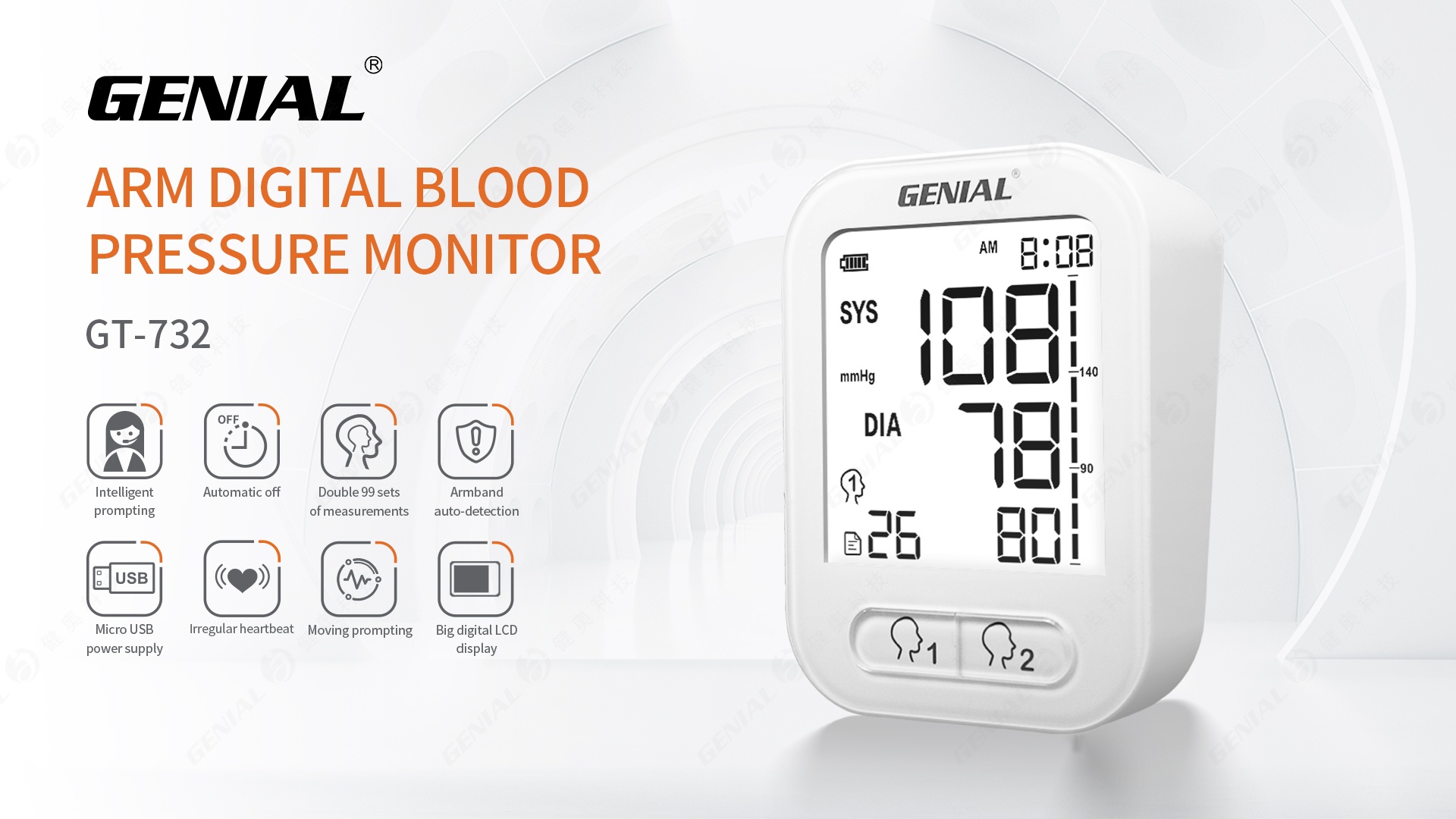
Within blood pressure monitoring, two architectures dominate. Wrist devices are portable and compact: the GT-701 series is a wrist-type digital blood pressure monitor listed under US FDA 510(k) K231250. Upper arm devices place the cuff around the upper arm, where the brachial artery runs close to the surface, and this is the format most home monitoring programs standardise on — models such as GT-732, GT-732M and GT-702BM fall under US FDA 510(k) K231245.
Manufacturing context behind the specification
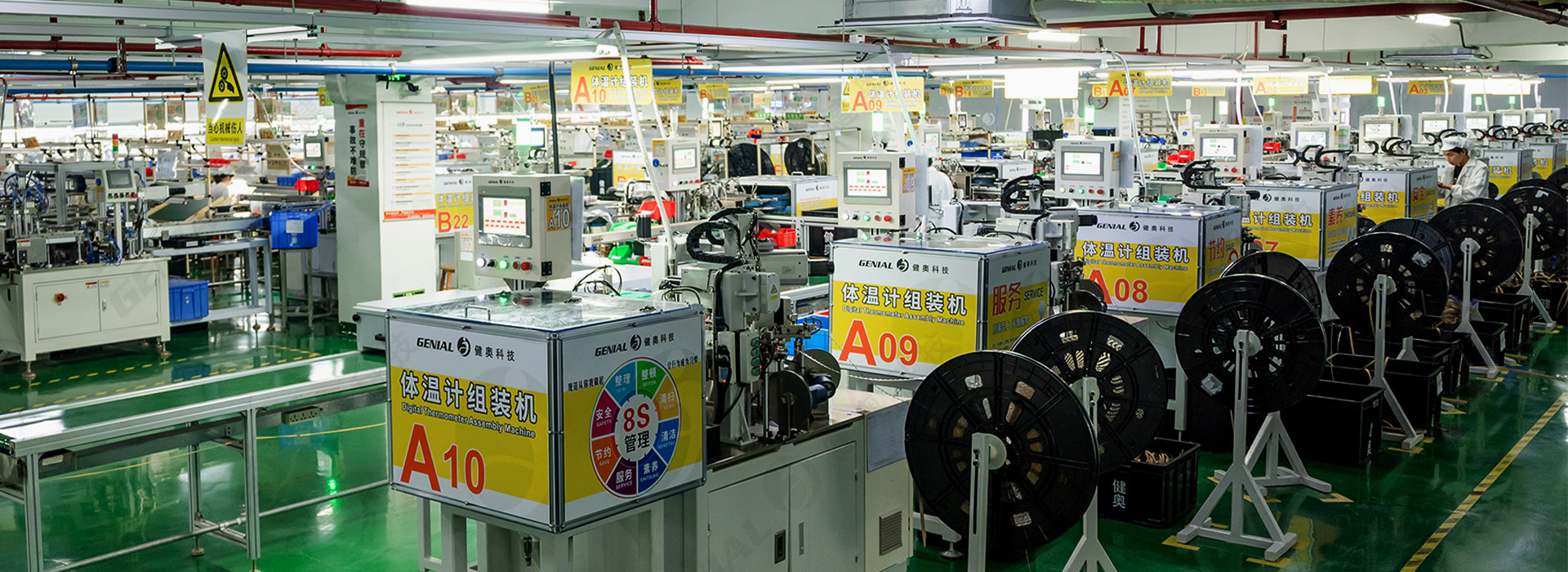
Specification values are only as stable as the process behind them. Guangdong Genial Technology Co., Ltd. operates a 45,000 m² production base with 251 employees, including a 29-engineer R&D team, and an annual output of 15,000,000 units. Around 80% of output is exported, and products are sold to 117 countries and regions, with product and trademark registration completed in 29 countries. The company holds 262 intellectual property certificates and operates under ISO 13485, ISO 14001, ISO 45001, BSCI (overall rating B, monitoring ID 25-0372553) and GB/T29490 systems, plus NBC Universal registration under manufacturer code L-4394.
Spec 1: Pressure Measuring Range — What 0~290 mmHg Actually Tells You
Definition. The pressure measuring range is the span of cuff pressure over which a monitor is specified to measure and display pressure, expressed in millimetres of mercury (mmHg). It is a working envelope, not a quality score: a wider envelope extends coverage, while the boundary behaviour determines what the device reports when a reading approaches the edge.
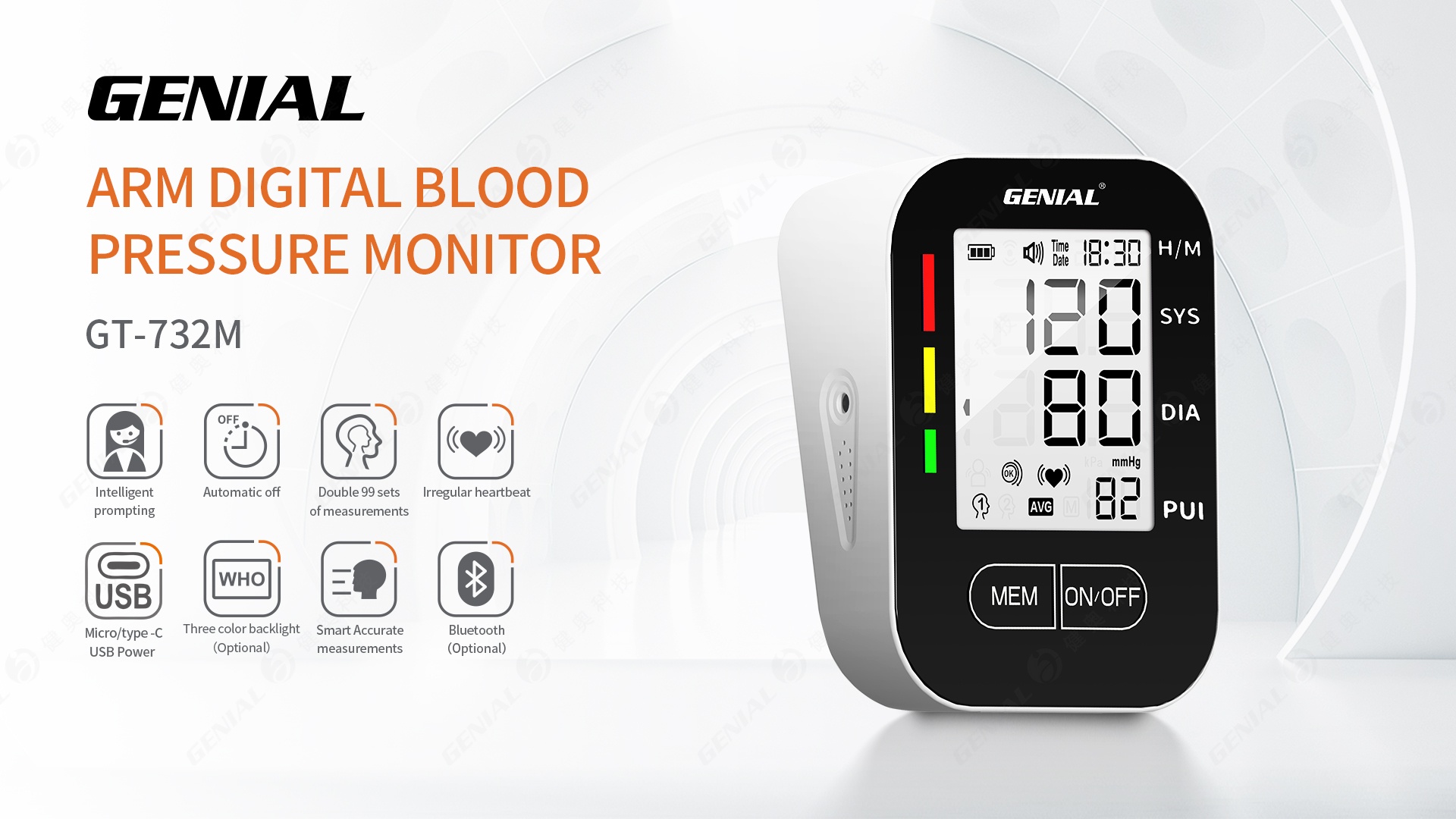
GT-732M is specified at 0~290 mmHg. Read practically, that envelope runs from near-zero, which covers the deflation tail of a measurement, up to 290 mmHg, which is headroom above the cuff pressures generated during inflation-based measurement on larger arms and in higher-pressure readings. For a program, the useful question is not whether 290 mmHg is higher than 280 mmHg, but whether the upper bound is comfortably above the highest pressure the device will need to hold in normal use in your population.
What to ask a supplier about a stated range
- Is the figure the measuring span, the display span, or the span over which accuracy is characterised?
- Is accuracy stated across the whole envelope, or only inside a sub-band?
- What does the device report when cuff pressure exceeds the upper bound — an error state, or a clamped reading?
- Does the stated range change with the cuff size fitted to the device?
A supplier who can answer these four questions without referring back to engineering has usually specified the product properly. A supplier who answers only the first has given you a marketing figure.
Spec 2: Pulse Error — Reading ≤±5% Correctly
Definition. Pulse error is the deviation between the pulse rate a monitor displays and the reference pulse rate, expressed here as a percentage rather than as a fixed number of beats per minute.
GT-732M is specified at ≤±5% pulse error. Because the tolerance is proportional, its absolute width scales with heart rate: the same ±5% band represents a wider absolute band at high pulse rates and a narrower one at low pulse rates. Buyers who convert a percentage into a fixed beats-per-minute figure on a tender document create a requirement the device was never specified to meet — and invite either an inflated quotation or a non-conforming delivery.
Pulse error is not pressure accuracy
These are two separate specifications and are frequently confused in comparison spreadsheets. Pressure accuracy describes how closely the device reproduces a reference pressure value. Pulse error describes how closely the displayed pulse rate tracks the reference pulse rate. A specification sheet that lists only one of the two is incomplete, regardless of how the product performs.
What to verify before acceptance
- Which reference method and reference device the figure was established against.
- Whether the stated error applies to a steady resting pulse only, or also across changing pulse rates.
- Whether the tolerance is expressed as a percentage or in absolute units — and which one your market's documentation expects.
- Whether pulse error is quoted separately from pressure accuracy on the same sheet.
For program staff, pulse error matters because pulse is read alongside pressure during the same measurement cycle. A pulse figure that drifts between consecutive readings on the same resting user undermines confidence in the whole device, even when pressure readings are correct.
Spec 3: Cuff Fit — 22~42 cm and the Materials Behind It
Definition. Cuff fit is the range of arm circumferences a cuff is designed to close around correctly, measured around the mid-upper arm. It is the specification most likely to be correct on paper and wrong in the field, because it describes a population rather than a device.
GT-732M supports an arm circumference of 22~42 cm and uses an eco-friendly TPU air bag. That single range spans 20 cm of arm circumference, which allows one SKU to serve a mixed population instead of two or three cuff sizes — a material advantage for distributors and for programs that cannot control who walks into a screening point.
GT-732 pairs an ABS housing with a PVC air bag and a Nylon binding strap. The ABS shell gives the device a rigid housing that holds its shape through repeated handling, the PVC air bag is an established bladder specification, and the Nylon strap is durable and easy to wipe between users.
Where material choices change the buying decision
- Eco-material positioning (GT-732M, TPU air bag). Relevant where a tender, a retail chain or a gift program states a material preference and expects the supplier to document it.
- Rigid housing and standard bladder (GT-732, ABS + PVC + Nylon). Relevant where handling is rough, where staff prefer a firm housing, and where a widely recognised bladder material simplifies servicing.
- Hygiene workflow. The binding strap and housing surface are the parts touched between users, so their cleanability matters more than the electronics in shared-use settings.
What to verify about the cuff
- Where the circumference is measured, and whether the cuff carries a visible size or range marking.
- Whether the air bag is replaceable independently of the cuff and housing.
- Which material declaration your target market requires, and whether the supplier can issue it for the exact model.
- How the cuff behaves at both ends of the stated range, not only near the middle.
Step-by-Step: A Five-Step Specification Verification Workflow
The sequence below is designed to run during the evaluation stage, before a purchase order is released. Each step removes a class of risk rather than adding a data point.
Step 1 — Profile the arms, not the average
Establish the likely arm circumference distribution of the end users. Where the spread is wide and uncontrolled, as in community screening or mixed-age chronic-care cohorts, a 22~42 cm cuff range such as the GT-732M specification allows one SKU to serve the whole group. Where the population is narrow and predictable, a standard cuff may be sufficient and cheaper to deploy.
Step 2 — Fix the pressure envelope against the use case
Decide the highest cuff pressure the device must hold in normal use, then confirm that the stated measuring range sits above it with margin. Confirm at the same time whether the manufacturer is quoting a measuring span or a claimed accuracy span.
Step 3 — Normalise the pulse error figure
Convert every candidate into the same unit of expression before comparing. Percentage-based figures such as the ≤±5% specification on GT-732M should be compared with other percentage figures, not with absolute beats-per-minute statements.
Step 4 — Audit materials and accessories against the deployment environment
Match the housing, air bag and strap to how the device will actually be handled: shared clinical use, home self-measurement, gift-box presentation for a promotional channel, or retail shelf display. This is where the GT-732M TPU air bag and the GT-732 ABS/PVC/Nylon configuration serve different briefs rather than competing.
Step 5 — Match certification to the exact model number
A certificate issued for a product family does not automatically prove coverage of the specific variant you are ordering. Verify that your model number appears on the document itself. In the GENIAL record, the arm-type digital blood pressure monitor range is supported by:
- CE MDR (EU) 2017/745 certificate CN25/00007953, SRN CN-MF-000021465, issued by SGS Belgium NV (Notified Body 1639), valid from 25 November 2025 to 25 November 2030, covering arm-type Digital Blood Pressure Monitors including GT-732.
- US FDA 510(k) K231245 for Digital Blood Pressure Monitor (Arm Type), listing GT-732, GT-732M and GT-702BM among the covered models.
- Japan MHLW Certificate of Foreign Medical Device Manufacturer BG10501496, valid from 19 November 2024 to 18 November 2029, for Class II home-use devices including electronic upper arm blood pressure monitors.
- MHRA registration 0000037417 for Great Britain, covering automatic electronic sphygmomanometers.
- ANVISA registration for Brazil under RDC 751/2022, covering Class II devices including blood pressure monitors.
- Roszdravnadzor registration No. 1241/1-3 140/2-25 for Russia, issued 12 January 2026, covering automatic electronic blood pressure monitors.
- ISO 13485:2016 certificate CN13/31126, issued by SGS United Kingdom Ltd, valid from 16 September 2025 to 16 September 2028, covering the design, development and manufacture of digital blood pressure monitors.
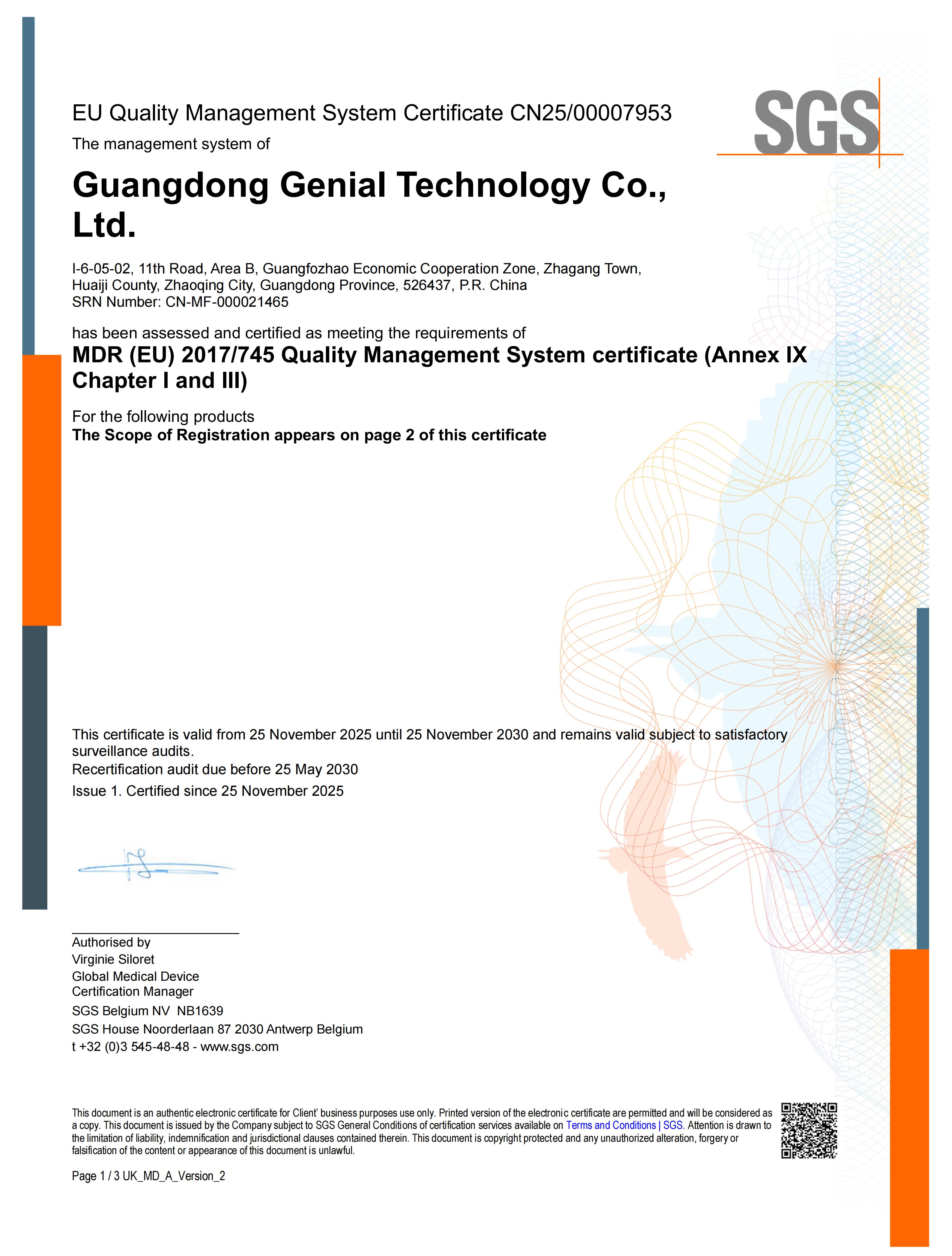
Verification discipline: ask for the certificate PDF and check the model list, the issuing body, the certificate number and the expiry date on the document itself. A screenshot or a model name mentioned in an email is not certificate coverage.
Which Specification Profile Fits Which Program
The three specifications above combine into recognisable profiles. The mapping below is a preference guide for evaluation teams, based on the verified differences between the GT-732M and GT-732 configurations.
Chronic disease management at home
Prefer the GT-732M profile. A 22~42 cm cuff range accommodates the family members and carers who share a device, ≤±5% pulse error gives a stable secondary reading beside pressure, and the eco-friendly TPU air bag supports the comfort and material expectations of long-term home users.
Community medical centres and screening points
Prefer GT-732M where the arm sizes walking into the site are unknown, because one cuff range covers more of the queue. Where the priority is a rigid housing that survives constant handling and a widely recognised bladder material, the GT-732 configuration with ABS housing, PVC air bag and Nylon binding strap is the more practical choice.
Health and wellness centres
Prefer GT-732M when the device doubles as part of a comfort-led member experience. The 0~290 mmHg envelope and the TPU air bag keep the hardware aligned with a premium service positioning, while the specification remains fully documented.
OEM gift and wholesale channels
Prefer GT-732 where the brief is cost-led and structure-led. The ABS housing reads as a solid product on an unboxing, the PVC air bag keeps the configuration conventional, and the Nylon strap holds up in storage and transport. Customisation of packaging, gift box, manual, logo print, colours and packaging specifications is available under OEM, with core hardware, PCB and key functions unchanged.
Offline household retail
GT-702BM is positioned for offline household retail, and it appears alongside GT-732 and GT-732M on the FDA 510(k) K231245 listing of arm-type models. For a shelf program, treat GT-702BM as the retail-facing SKU and confirm its own specification sheet before committing to shelf copy.
Short preference summary
- Mixed-population programs: GT-732M — 22~42 cm cuff, 0~290 mmHg, ≤±5% pulse error, eco-friendly TPU air bag.
- Cost-led and structure-led programs: GT-732 — ABS housing, PVC air bag, Nylon binding strap.
- Retail shelf programs: GT-702BM — positioned for offline household retail.
Comparison Table: GT-732M vs GT-732 on the Specifications That Decide Fit
| Evaluation dimension | GT-732M | GT-732 |
|---|---|---|
| Pressure measuring range | 0~290 mmHg | Confirm on the model specification sheet |
| Pulse error | ≤±5% | Confirm on the model specification sheet |
| Supported arm circumference | 22~42 cm | Confirm on the model specification sheet |
| Air bag material | Eco-friendly TPU | PVC |
| Housing and strap | Confirm on the model specification sheet | ABS housing, Nylon binding strap |
| Certification coverage in the verified record | US FDA 510(k) K231245 (arm-type listing includes GT-732M) | CE MDR CN25/00007953 (SGS Belgium NV, Notified Body 1639) and US FDA 510(k) K231245 |
| Program fit | Chronic disease management, community screening, mixed arm-size populations, eco-material preferences | Cost-led gift and wholesale programs, rigid housing preference, standard bladder specification |
Cells marked for confirmation are deliberately left open. Supplying a comparison value that is not documented on the model sheet would create a specification the buyer cannot enforce — the exact failure this workflow is designed to prevent.
Frequently Asked Questions
1. Which certifications should be verified for an upper arm blood pressure monitor sold in the EU, the US and Japan?
For GENIAL arm-type monitors, three documents carry the most weight. In the EU, CE MDR (EU) 2017/745 certificate CN25/00007953, SRN CN-MF-000021465, issued by SGS Belgium NV (Notified Body 1639) and valid from 25 November 2025 to 25 November 2030, lists arm-type digital blood pressure monitor models including GT-732. In the United States, FDA 510(k) K231245 covers Digital Blood Pressure Monitor (Arm Type) models including GT-732, GT-732M and GT-702BM. In Japan, MHLW Certificate of Foreign Medical Device Manufacturer BG10501496 is valid from 19 November 2024 to 18 November 2029 for Class II home-use devices. These sit on an ISO 13485:2016 quality system certified under CN13/31126 by SGS United Kingdom Ltd, valid to 16 September 2028. Always confirm the exact model number on the certificate itself.
2. Can cuff size, materials and packaging be customised for a private-label upper arm monitor?
Yes, and the depth of customisation determines which production model applies. Under OEM, customisation covers packaging, gift box, user manual, product logo printing, colour schemes and packaging specifications, while core hardware, PCB and key functions remain unchanged; the MOQ for blood pressure monitors is 2,000 units. Under ODM, customisation extends to industrial design, tooling, structure, PCB firmware, algorithms, Bluetooth functionality, display interface, packaging system and exclusive product model registration, with an MOQ of 5,000 units for product modification and 10,000 units for new mould development, and tooling cost refundable for large-volume projects. JDM supports joint product definition with IP ownership allocated by contract, at a monthly capacity of 300,000 units. OBM covers regional distributor authorisation, gift-box combinations and shipping carton labels.
3. What drives the cost difference between the GT-732 and GT-732M specification profiles?
Four factors dominate. First, air bag material: GT-732M uses an eco-friendly TPU air bag, GT-732 uses PVC. Second, cuff coverage: the GT-732M cuff spans 22~42 cm, which can replace multiple cuff sizes in a mixed population, while a standard cuff reduces material content but may require size variants for wide-spread cohorts. Third, housing and strap: GT-732 pairs an ABS housing with a Nylon binding strap. Fourth, customisation depth, since ODM tooling and firmware work carry their own cost structure, with tooling refundable for large-volume projects. Commercial thresholds matter as much as unit cost: OEM blood pressure monitors start at 2,000 units, ODM modification at 5,000 units and new mould development at 10,000 units, so the same device can carry very different landed economics depending on configuration and volume.
4. How fast can samples be supplied, and what should be tested before approval?
Under OEM, sample lead time is 3 days, with small orders following in 3~7 days and mass orders in 10~15 days. Sample validation is a formal stage in the quality flow rather than an informal courtesy: the sequence runs from order documentation and packaging approval, through incoming material inspection and 100% production inspection, to final sampling inspection before shipment. Test the cuff at both ends of the stated 22~42 cm range rather than the middle, check pulse reading stability across consecutive measurements on the same resting user, compare pressure readings against a reference device, and assess the housing, air bag and strap against the way the device will be handled in your channel.
5. What production lead time applies after sample approval, and what warranty covers the device?
Lead time depends on the production model. Under OEM, small orders ship in 3~7 days and mass orders in 10~15 days. Under ODM, minor modifications without new tooling take 7~15 days, while new mould development takes 45~50 days. JDM projects run 45~60 days. Under OBM, in-stock products ship within 48 hours and replenishment orders in 5~7 days. Every configuration carries a free 12-month warranty on presentation of valid proof of purchase, supported by certification documentation and technical consultation. To start an evaluation, request a GT-732M or GT-732 sample and the matching specification sheet from the GENIAL team at market6@genial.cn, by WhatsApp on +86 18938327866, or through www.cngenial.com.
Conclusion: Buy the Specification, Not the Number
Pressure range, pulse error and cuff fit are the three specifications that determine whether an upper arm blood pressure monitor performs in the hands of the people who receive it. Read together, they answer three separate questions: can the device hold the pressures my users generate, does it report pulse with a tolerance I can defend in a tender, and will the cuff close correctly on the arms in my program.
The comparison logic is straightforward. GT-732M suits programs where arm sizes vary, where ≤±5% pulse error and a 0~290 mmHg range need to be documented together, and where an eco-friendly TPU air bag supports the positioning — with a 22~42 cm cuff doing the work of several sizes. GT-732 suits programs where a rigid ABS housing, a PVC air bag and a Nylon binding strap match the handling profile and the cost target. GT-702BM covers the offline household retail shelf.
Before you sign, run the five-step verification: profile the arms, fix the pressure envelope, normalise the pulse error, audit the materials, and match the certificate to the exact model number. That sequence turns a specification sheet into evidence you can hold a supplier to.
Next step: sample, specification sheet and programme quotation
GENIAL supplies upper arm digital blood pressure monitors for chronic disease management, community medical centres, health and wellness centres, and OEM gift and wholesale programs. Request a GT-732M or GT-732 sample, the model specification sheet, and a configuration-based quotation.
Email: market6@genial.cn | WhatsApp: +86 18938327866 | Website: www.cngenial.com
Download the 2026 English catalogue: GENIAL product catalogue (PDF)

Have Questions or Need More Details?
Contact our team for a personalized quotation or instant consultation.
Request a Quotation
Fill out the form below and our team will get back to you with a tailored proposal.
WhatsApp Direct Chat
Prefer to chat in real-time? Message us on WhatsApp for instant assistance & quick answers.
- Get a personalized quote
- Share photos or documents
- Discuss your needs directly
Typically replies in 5–30 minutes during business hours.