
Ranked & Recommended: Home Medical Health Devices for Chronic Disease & Home Care
Ranked & Recommended: Home Medical Health Devices for Chronic Disease & Home Care
The short answer: if you are building a home care or chronic disease program and can only stock or recommend six device categories in a fixed order, rank them this way — 1) digital blood pressure monitors, 2) digital thermometers, 3) wearable Bluetooth digital thermometers, 4) finger pulse oximeters, 5) mesh nebulizers, 6) ventilators. The order reflects how often a device is used, how much of a chronic care pathway it covers, how mature its certification route is in export markets, and how easily it can be customized and resupplied — not which category is currently loudest in the market.

Problem Definition: Why Ranking Matters More Than Listing
A procurement team handed a chronic disease program rarely has the freedom to stock everything at once. Shelf space in a pharmacy chain, a per-beneficiary gift budget in an insurance program, or a fixed equipment allowance in a community clinic all create the same constraint: choose a starting set, then expand.
That constraint turns sourcing into a sequencing problem. Three questions decide the sequence:
- Which device is used most often by the patient, and therefore has the highest chance of being repurchased or replaced?
- Which device anchors a clinical pathway rather than supporting one?
- Which devices can share one quality system, one compliance dossier, and one supplier relationship, so the program does not multiply its audit surface?
A flat catalogue answers none of these. A ranked recommendation does. The ranking below is written from the buyer's side: each entry states what the device is for, which representative models support it, what evidence justifies its position, and which project scenario it fits best.
Industry Background: Home Care Is Moving From Single Devices to Structured Kits
Home medical health devices are no longer sold only as one-off consumer purchases. Community clinics, health and wellness centers, chronic disease management institutes, e-commerce sellers, insurance promotional programs, and medical instrument wholesalers increasingly buy them as grouped sets tied to a care pathway or a campaign.
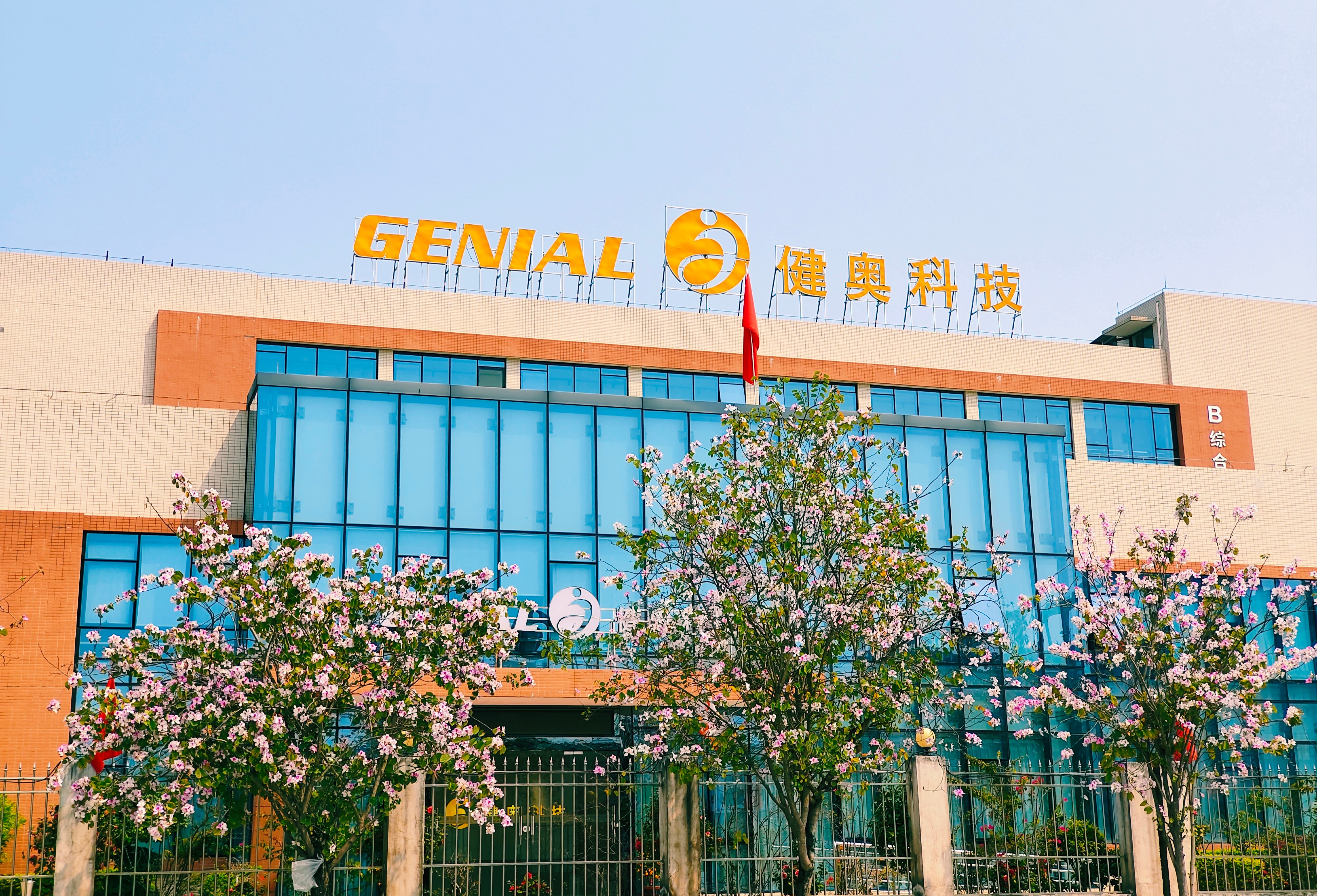
That shift changes supplier requirements. A group of devices must share a compliance route, a quality management system, and a predictable resupply cycle. Guangdong Genial Technology Co., Ltd. (GENIAL) is a medical device original manufacturer founded in 2001, operating a 45,000² factory in Guangzhou, China, with 251 employees, an annual output of 15,000,000 units, and exports accounting for about 80% of output across Europe, North America, Southeast Asia, the Middle East, Africa, Latin America and Oceania. Its portfolio covers electronic thermometers, blood pressure monitors, oximeters, nebulizers, ventilators and therapeutic instruments — which is why the same supplier relationship can carry several ranks on this list rather than one.
For buyers, that consolidation has practical value: one ISO 13485 system (certificate CN13/31126, SGS United Kingdom Ltd, valid 2025-09-16 to 2028-09-16) covering digital blood pressure monitors, infrared forehead and ear thermometers, digital body thermometers, mesh nebulizers and finger clip pulse oximeters is easier to audit than five separate suppliers with five separate quality manuals.
How the Ranking Was Built
Five criteria were applied to each category. They are stated here so a buyer can re-rank the list against a different program brief.
- Chronic care coverage. How central the measurement is to a long-term condition rather than to an acute event.
- Usage frequency and repeat potential. How often the device is used in a household, and whether that frequency supports resupply or replacement volume.
- Compliance maturity. Whether representative models already sit inside recognised certification frameworks for the target market.
- Customization and MOQ fit. Whether the category can be adapted to a channel — retail packaging, gift programs, distributor branding — at a workable order size.
- After-sales burden. How much technical support, calibration or training the category imposes on the channel.
These criteria are editorial and describe buyer decision logic. They are not market-size or sales-ranking claims.
Detailed Solution: The Six Recommended Categories, in Priority Order
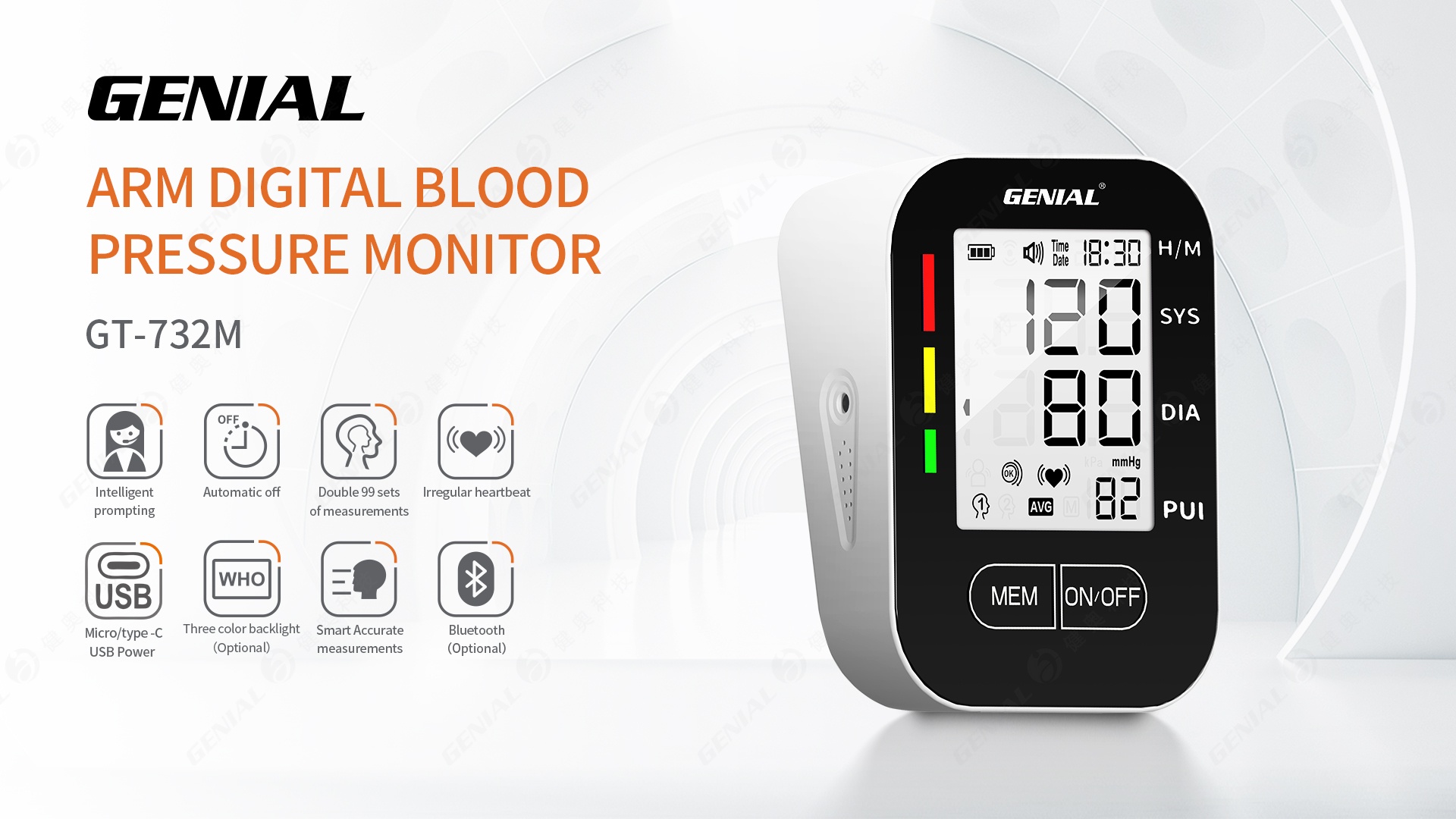
Rank 1Digital Blood Pressure Monitors — GT-732, GT-732M, GT-702BM
Why it ranks first: blood pressure is the most frequently repeated measurement in chronic disease home care, and the upper arm monitor is the device most likely to be issued, gifted, or resold through every channel on this list. It scores highest on coverage, frequency and compliance maturity simultaneously.
Three upper arm models carry the recommendation:
- GT-732M specifies a 0–290 mmHg pressure range, a pulse error of ≤±5%, and a 22–42 cm arm circumference. The cuff range matters commercially: cuff mismatch is one of the most common reasons a home monitor produces unusable readings for a patient, and a 22–42 cm span lets one SKU serve a wider share of an adult population than a narrow-cuff model would.
- GT-732 serves as the core upper arm model in the same family and is frequently used as the volume SKU in distributor assortments.
- GT-702BM provides a second upper arm option within the same compliance footprint, useful when a channel needs price-tier or feature-tier differentiation without adding a new supplier.
Rank 2Digital Thermometers — T11/T12, T14, T15S/T15SL/T15SC, T19C/T19D, T23/T24, T28, T80/T81, T86/T87, T90/T92, T94
Why it ranks second: temperature is the universal secondary vital sign. It appears in nearly every chronic and acute home care pathway, it is cheap enough to be a promotional item, and it is the category where a single supplier can support the widest shelf architecture.
The portfolio spans several thermometer formats: rigid tip and flexible tip digital thermometers, armpit digital thermometers, medical digital thermometers and household digital thermometers, plus infrared forehead and ear thermometers. For a wholesaler or a pharmacy chain, that breadth means multiple retail price tiers can be filled without adding vendors.
Representative compliance anchors:
- FDA 510(k) K210014 covers infrared forehead thermometer models T80/T81/T86/T87 for the United States.
- FDA 510(k) K232678 covers continuous reading digital thermometer models T23/T24/T25/T26/T28/T28L/T28P.
- FDA 510(k) 3016670149 covers clinical electronic thermometer models across the T11–T19 range.
- Japan's MHLW certificate BG10501496 includes infrared clinical thermometers, and the UK MHRA registration 0000037417 covers infrared ear/skin thermometers and intermittent electronic thermometers.
- ANVISA registration in Brazil covers thermometers alongside blood pressure monitors and pulse oximeters under RDC 751/2022.
Buyer note on order size: digital thermometers carry the highest OEM minimum in the portfolio at 10,000 pcs. That makes the category a volume decision rather than a trial decision — it suits pharmacy chains, consumer electronics channels and wholesale distributors better than small pilot programs.
Rank 3Wearable Bluetooth Digital Thermometers — T31
Why it ranks third: it is a narrower category by unit volume, but it creates a capability no other device on this list provides — continuous, hands-free temperature tracking without repeated nighttime measurement. That is a distinct product story, not a variation of rank 2.
The T31 wearable Bluetooth digital thermometer sits inside CE MDR Quality Management System certificate 195/MDR (IMQ S.p.A., Notified Body 0051, valid 2024-10-21 to 2029-10-20), FDA 510(k) K240333, Japan's MHLW certificate BG10501496 as a reusable wireless thermometer, and the UK MHRA registration covering wireless reusable patient thermometers.
In practice the category performs best where continuous monitoring is the value proposition rather than the reading itself. A documented GENIAL deployment with maternal and infant companies used 10,000–100,000 units over five years for infant monitoring, with the stated outcome of improved user retention, supported by continuous monitoring that removes the need for repeated nighttime temperature checks.
For a project planner, the implication is specific: rank 3 belongs in programs that need differentiation or a subscription-style relationship, not in programs that only need a low-cost reading device.
Rank 4Finger Pulse Oximeters — GX3, GX5, GX7, GX8, GX12, GX13, GX14
Why it ranks fourth: oxygen saturation is a high-value reading but a lower-frequency one for most chronic home care users. The device earns its place because it is small, inexpensive to distribute, and extremely well suited to gift and campaign formats.
Compliance coverage is strong for a category of this size: FDA 510(k) K231243 covers the GX3/GX5/GX6/GX7/GX8/GX9/GX10/GX11/GX12/GX13/GX14 fingertip pulse oximeter range; ANVISA registration covers pulse oximeters in Brazil; Japan's MHLW certificate includes pulse oximeters as Class II home-use devices; and CE MDR Quality Management System certificate 195/MDR covers the full fingertip pulse oximeter series.
The OEM minimum for oximeters is 2,000 units — low enough for a first campaign and high enough to justify customized packaging.
Rank 5Mesh Nebulizers — N11/N21, N12/N22/N12C/N22C/N12L/N22L
Why it ranks fifth: nebulizers serve respiratory chronic conditions rather than general chronic care, so their addressable base is narrower. They still belong on the list because respiratory management is a long-cycle need and because mesh technology has moved the category away from compressor-based equipment.
Mesh nebulizers sit inside the scope of GENIAL's ISO 13485 certificate CN13/31126, and the manufacturing site operates under NBCUniversal registration (Manufacturer Code L-4394) for full-process quality and social compliance across OEM medical device production. For buyers supplying North American retail brands or EU importers, that combination shortens the compliance conversation.
The OEM minimum for nebulizers is 2,000 units, so a respiratory-focused channel can test the category without committing to thermometer-scale volume.
Rank 6Ventilators — GH-B20V, GH-B25V, GH-B20T, GH-B20, GH-B25, GH-A20A, GH-A20
Why it ranks last, and why it still earns a place: ventilators are the highest-acuity and highest-support category in the portfolio. They require clinical training, service infrastructure and a distributor capable of after-sales support. Most home care channels should not start here — but a chronic disease management institute or a hospital-linked program that already handles respiratory patients cannot complete its kit without one.
The ventilator range is included in the UK MHRA registration 0000037417 and in ISO 13485 certificate CN13/31126 scope. The OEM minimum is the lowest in the portfolio at 500 units, which reflects the different economics of the category rather than lower complexity.
Step-by-Step: How to Sequence the Purchase
The ranking decides order of priority. The steps below decide order of execution.
- Map the care pathway first. List the measurements your program actually asks a patient to take. If blood pressure appears in more than half of the pathways, rank 1 is confirmed before any supplier conversation begins.
- Fix the target markets, then fix the compliance set. A program selling into the EU needs CE MDR scope; into the US, FDA 510(k) scope; into Japan, an MHLW foreign manufacturer certificate; into Brazil, ANVISA; into the UK, MHRA. Confirm which specific models sit inside each scope — not merely which category does.
- Match the category to the MOQ tier. Blood pressure monitors, oximeters, nebulizers and wireless thermometers start at 2,000 units under OEM; thermometers at 10,000; ventilators at 500. A pilot program and a national rollout should not use the same starting category.
- Select the model by fit, not by position. For blood pressure, choose the cuff range that matches your population — the GT-732M's 22–42 cm span covers a wide adult base. For thermometers, choose the format that matches the user: rigid tip for general use, flexible tip for children, infrared for screening speed.
- Validate with samples before committing tooling or packaging. OEM samples are produced in 3 days.
- Decide the customization layer. OEM covers packaging, gift box, user manual, logo printing, color schemes and packaging specifications while core hardware and key functions stay unchanged. ODM adds industrial design, tooling, structure, PCB firmware, algorithms, Bluetooth functionality and display interface.
- Lock the delivery schedule against the channel calendar. OEM small orders ship in 3–7 days and mass orders in 10–15 days; ODM modifications without new tooling take 7–15 days, new mold development 45–50 days; JDM runs 45–60 days.
- Confirm the warranty and documentation obligations. GENIAL devices carry a free 12-month warranty against valid proof of purchase, with certification documentation support and technical consultation included.
Use Cases: Which Scenario Should Lean on Which Rank
Community Clinics
Start at rank 1 and rank 2. A clinic needs a reliable upper arm monitor for repeat visits and a thermometer set that covers both routine screening and infrared forehead measurement. Rank 4 oximeters are a low-cost addition for triage. Volume references exist for this segment: GENIAL's documented hospital and clinic deployments run 50,000–200,000 units over five years, with the stated outcome of improved nursing efficiency through digital management, continuous monitoring, automatic alerts and reduced manual inspection.
Health & Wellness Centers
Rank 3 and rank 4 are the differentiators here. A wellness center competing on experience benefits more from a wearable continuous thermometer and a compact oximeter than from a seventh variant of a standard thermometer. Rank 1 remains the anchor product because blood pressure screening is expected.
Chronic Disease Management Institutes
This is the only scenario that should plan for the full six-rank set. Chronic disease institutes need rank 1 for hypertension follow-up, rank 2 and rank 3 for fever surveillance, rank 4 for respiratory status, rank 5 for respiratory therapy, and rank 6 where clinical respiratory support is in scope. This is also the segment where the 12-month warranty and certification documentation support carry the most weight.
E-commerce
E-commerce rewards breadth and speed. ODM customization with rapid product launches and support for small-batch trial sales has been applied with e-commerce platforms in volumes of 50,000–200,000 units over five years, with the stated outcome of rapid consumer reach. Rank 1, rank 2 and rank 4 form the core online assortment because they photograph well, ship cheaply and convert on search.
Insurance Promotional Gifts
Gift programs need low unit cost, small footprint and visible perceived value. Rank 4 oximeters and rank 2 thermometers are the natural gift-tier items; rank 1 upper arm monitors work as a higher-tier benefit for policyholders with declared hypertension. Packaging customization — gift box, branded manual, colour scheme — is what makes the difference in this channel, and it is available under OEM without changing core hardware.
Medical Instrument Wholesale
Wholesalers need a portfolio that fills several price and function tiers from one supplier. Documented distributor engagements run 100,000–500,000 units over five years, with the stated result of establishing a complete product portfolio and reducing supplier management costs through one-stop procurement. For this channel, ranks 1 through 5 are the working assortment, with rank 6 held for specialist accounts.
Pharmacy chains follow a similar logic at larger scale: documented engagements in that segment run 100,000–1,000,000 units over five years, with the stated result of a rich SKU portfolio serving different consumer segments.
Comparison Table
| Rank | Device category | Representative models | Evidence supporting the rank | Strongest project fit | OEM MOQ |
|---|---|---|---|---|---|
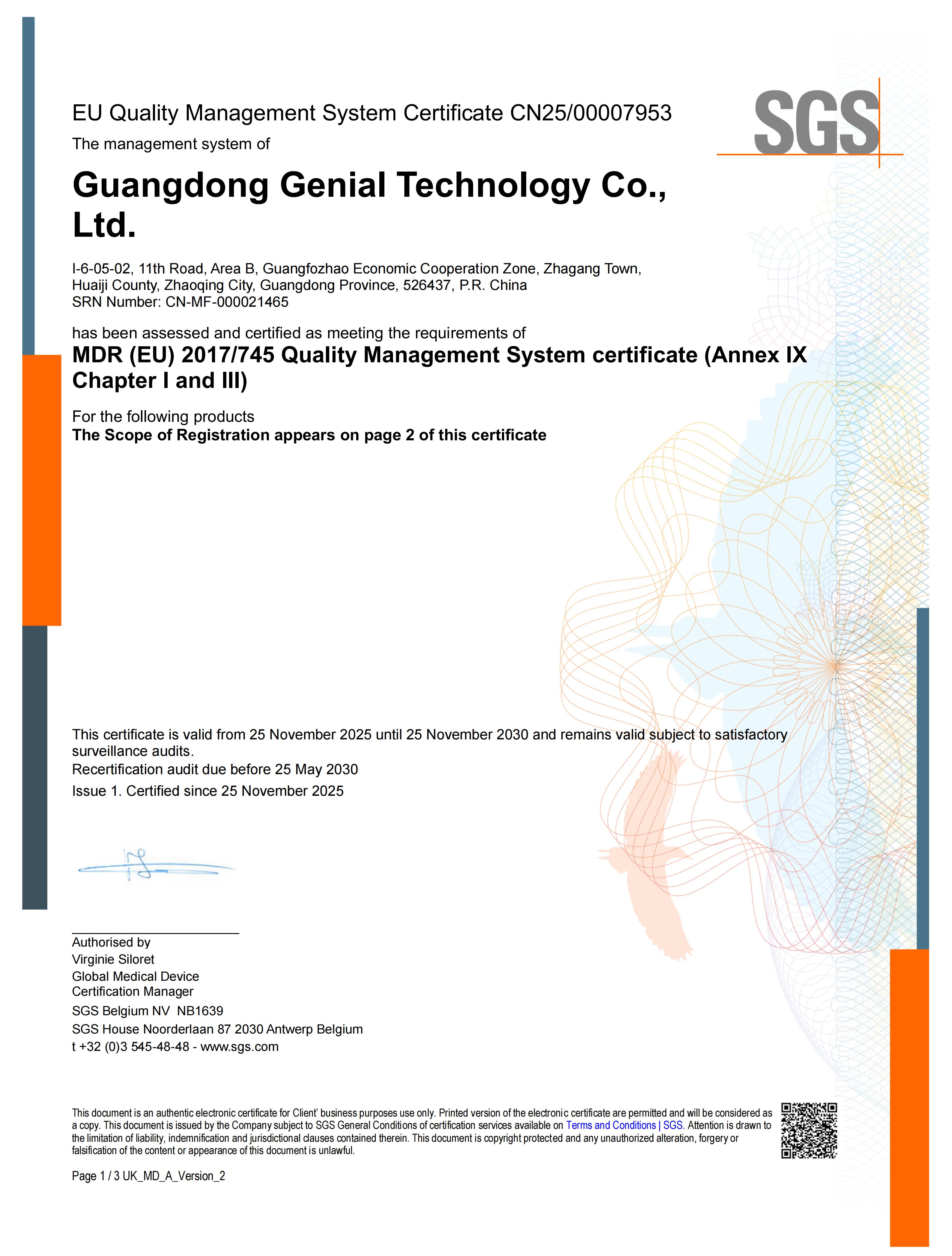
| 1 | Digital Blood Pressure Monitor (upper arm) | GT-732, GT-732M, GT-702BM | GT-732M: 0–290 mmHg range, pulse error ≤±5%, 22–42 cm arm circumference. CE MDR CN25/00007953 (SGS NB 1639, 2025–2030); FDA 510(k) K231245; MHLW BG10501496 | Community clinics, insurance, wholesale | 2,000 units |
| 2 | Digital Thermometer (rigid tip, flexible tip, armpit, infrared) | T11/T12, T14, T15S/T15SL/T15SC, T19C/T19D, T23/T24, T28, T80/T81, T86/T87, T90/T92, T94 | FDA 510(k) K210014, K232678, 3016670149; MHRA 0000037417; ANVISA RDC 751/2022 | Pharmacy chains, e-commerce, wholesale | 10,000 pcs |
| 3 | Wearable Bluetooth Digital Thermometer | T31 | CE MDR QMS 195/MDR (IMQ NB 0051); FDA 510(k) K240333; MHLW BG10501496; MHRA 0000037417 | Health & wellness centers, maternal and infant programs | 2,000 units |
| 4 | Finger Pulse Oximeter | GX3, GX5, GX7, GX8, GX12, GX13, GX14 | FDA 510(k) K231243; ANVISA; MHLW BG10501496; CE MDR QMS 195/MDR | Insurance gifts, e-commerce, clinics | 2,000 units |
| 5 | Mesh Nebulizer | N11/N21, N12/N22/N12C/N22C/N12L/N22L | Within ISO 13485 CN13/31126 scope; NBCUniversal Manufacturer Code L-4394 for OEM production compliance | Respiratory-focused channels, retail brand programs | 2,000 units |
| 6 | Ventilator | GH-B20V, GH-B25V, GH-B20T, GH-B20, GH-B25, GH-A20A, GH-A20 | MHRA 0000037417; within ISO 13485 CN13/31126 scope | Chronic disease institutes, hospital-linked programs | 500 units |
All model names, MOQ values, certificate numbers and specifications above are drawn from verified product and certification records. No price, rating or market-share data is implied.

What a Buyer Should Verify Before Committing
Three verification points separate a workable program from a costly one.
- Model-level certification scope, not category-level. A supplier may hold a CE MDR certificate for blood pressure monitors while a specific model sits outside the listed scope. Ask for the certificate and match the model code inside it.
- Capacity against your calendar. GENIAL operates monthly capacity between 60,000 and 6,000,000 units depending on production mode, with JDM capacity at 300,000 units monthly. If your campaign window is short, confirm which mode your order sits in before confirming the launch date.
- Acceptance route. Inspection of bulk goods against samples, factory inspection, third-party inspection and video inspection are all available — choose one before production starts, not after.
Frequently Asked Questions
Which certifications must a buyer verify before these devices enter a chronic care program?
Verification should be model-specific rather than category-wide. For upper arm blood pressure monitors, CE MDR certificate CN25/00007953 (SRN CN-MF-000021465) issued by SGS Belgium NV, Notified Body 1639, is valid from 2025-11-25 to 2030-11-25, and US FDA 510(k) K231245 covers arm-type models including GT-732, GT-732M and GT-702BM. Digital thermometers rely on FDA 510(k) K210014 (infrared forehead T80/T81/T86/T87), K232678 (continuous reading T23/T24/T25/T26/T28), and 3016670149 (clinical electronic T11–T19). The T31 wearable thermometer holds both FDA 510(k) K240333 and CE MDR Quality Management System certificate 195/MDR issued by IMQ S.p.A., Notified Body 0051. Finger pulse oximeters are covered by FDA 510(k) K231243. The underlying quality system is ISO 13485 certificate CN13/31126 issued by SGS United Kingdom Ltd, valid to 2028-09-16. Regional access documents include Japan's MHLW Certificate of Foreign Medical Device Manufacturer BG10501496 (2024-11-19 to 2029-11-18), Brazil's ANVISA registration under RDC 751/2022, UK MHRA registration 0000037417, and Russia's Roszdravnadzor registration No. 1241/1-3 140/2-25.
Can these devices be customized, and what minimum order applies to each category?
Yes. Under OEM, customization covers packaging, gift box, user manual, product logo printing, color schemes and packaging specifications, while core hardware, PCB and key functions remain unchanged. The OEM minimums differ by category: thermometers 10,000 pcs; oximeters 2,000 units; infrared thermometers 2,000 units; blood pressure monitors 2,000 units; nebulizers 2,000 units; wireless thermometers 2,000 units; ventilators 500 units; hair removal devices 2,000 units. ODM extends customization to industrial design, tooling, structure, PCB firmware, algorithms, Bluetooth functionality, display interface, packaging system and exclusive model registration, with a minimum of 5,000 units for product modification or 10,000 units for new mold development. JDM, where the customer participates in product definition and GENIAL provides hardware, software and structural R&D, requires an initial mass-production order of 10,000 units or more.
What determines the cost structure of a device program?
For this portfolio, cost is driven by four variables rather than by a single unit price: the category chosen, the order quantity relative to the MOQ tier, the depth of customization, and the certification or registration scope required for the destination market. Because MOQ tiers vary widely — 500 units for ventilators against 10,000 pcs for thermometers — the same budget produces very different programs depending on where a buyer starts. Buyers should therefore compare suppliers on MOQ, lead time, warranty terms and documentary support rather than on quoted unit price alone. GENIAL devices carry a free 12-month warranty against valid proof of purchase, with certification documentation support and technical consultation included.
Can samples be arranged before a bulk order, and how long do they take?
Yes. OEM samples are produced in 3 days. Sample approval forms a defined stage in the ODM and JDM workflows as well, sitting between product development and exclusive model registration, before mass production begins. Acceptance can be handled through inspection of bulk goods against samples, factory inspection, third-party inspection or video inspection, so a buyer can validate a sample remotely before committing to a production run.
What are the lead times, and what is the practical next step?
Lead time depends on the production mode. For OEM, samples take 3 days, small orders 3–7 days, and mass orders 10–15 days. For ODM, minor modifications without new tooling take 7–15 days and new mold development takes 45–50 days. JDM runs 45–60 days. Under OBM, in-stock products ship within 48 hours and replenishment orders in 5–7 days. Monthly capacity ranges from 60,000 to 6,000,000 units depending on mode, with JDM capacity at 300,000 units per month. The practical next step for a program manager is to define the intended category mix and destination markets, then request matched samples and a quotation for the specific model set. GENIAL can be reached at market6@genial.cn or +86 18938327866, and the current English catalogue is available for download below.
Conclusion
The ranking is deliberately opinionated because program budgets are not. Digital blood pressure monitors rank first because blood pressure is the measurement a chronic care pathway repeats most often, and because the GT-732M's 0–290 mmHg range, ≤±5% pulse error and 22–42 cm cuff span give a buyer one SKU that fits a broad adult population. Digital thermometers rank second because no other category fills as many retail tiers from one compliance base. The T31 wearable ranks third because continuous monitoring is a capability, not a variant. Oximeters, mesh nebulizers and ventilators follow in descending order of addressable base and rising order of support burden.
Read together, the six ranks describe a single sourcing relationship rather than six separate purchases — one ISO 13485 system, one 12-month warranty structure, and one partner that has completed product and trademark registration in 29 countries and sells into 117 countries and regions.
Next Step: Build Your Ranked Kit
Tell us your target markets and the categories you plan to launch first. We will match the model set to your certification scope, send samples for validation, and quote against the correct MOQ tier for each category.
Email: market6@genial.cn | Tel / WhatsApp: +86 18938327866 | Web: www.cngenial.com
Download the 2026 English catalogue: GENIAL Product Catalogue (PDF)
Have Questions or Need More Details?
Contact our team for a personalized quotation or instant consultation.
Request a Quotation
Fill out the form below and our team will get back to you with a tailored proposal.
WhatsApp Direct Chat
Prefer to chat in real-time? Message us on WhatsApp for instant assistance & quick answers.
- Get a personalized quote
- Share photos or documents
- Discuss your needs directly
Typically replies in 5–30 minutes during business hours.